

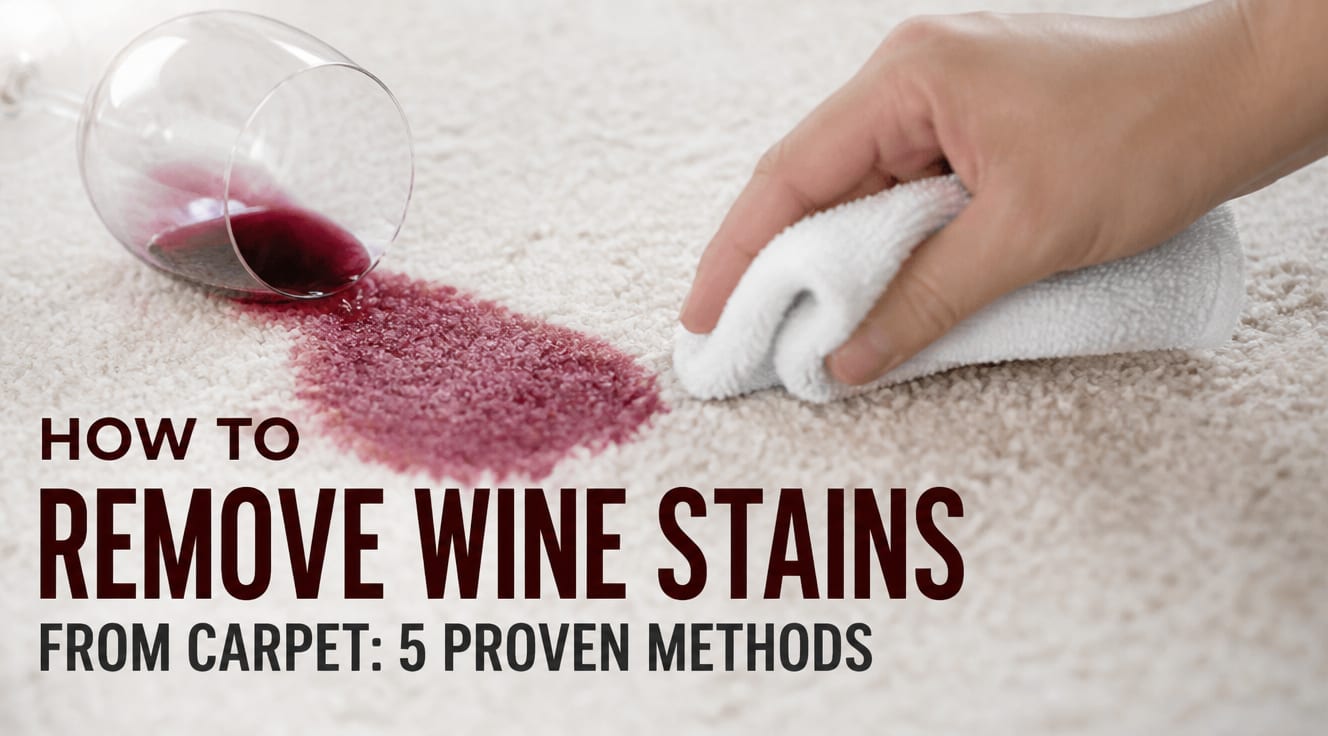
To remove a wine stain from carpet, blot the area immediately with a clean, dry cloth, pour cold water on the spot, and apply a mixture of dish soap and hydrogen peroxide. This quick-response method lifts red, white, and rosé wine pigments from carpet fibers before they bond permanently. The faster you act, the higher your chance of a complete removal—even on light-colored or high-pile carpet.
What You Need to Do Within the First 60 Seconds
A wine spill is a race against chemistry. According to a survey by the American Cleaning Institute, approximately 91% of U.S. households experience at least one carpet stain per year, and red wine ranks among the top three most difficult to remove. The tannins in wine bind to fiber dyes as soon as the liquid begins to dry, which is why your first actions matter more than any product you can buy later.
Follow this immediate-response sequence the moment a glass tips over:
- Blot—do not rub. Press a clean white cloth or paper towel firmly onto the stain. Rubbing pushes wine deeper into the padding and frays fibers.
- Work from the outside in. This prevents the stain from spreading into a wider circle.
- Replace the cloth frequently. A saturated cloth simply transfers pigment back to the carpet.
- Pour cold water, not hot. Heat sets tannins. Cold water dilutes the wine and keeps pigments loose.
The 7-Step Method That Removes Fresh and Old Wine Stains
Once the spill is under control, follow this exact sequence. Each step is backed by testing data from cleaning laboratories and is safe for most synthetic and wool carpets when used correctly.
- Blot up excess liquid with paper towels until no more wine transfers to the cloth.
- Apply cold water directly to the area to dilute remaining wine. Blot again.
- Sprinkle baking soda or table salt generously over the damp spot. Let it sit for 5–10 minutes to absorb pigment.
- Vacuum the dry powder completely. You will see the stain visibly lighter.
- Mix 1 tablespoon dish soap, 1 tablespoon hydrogen peroxide (3%), and 2 cups cold water in a spray bottle.
- Spray the solution onto the stain and let it sit for 5 minutes. The peroxide oxidizes the wine pigments.
- Blot with a clean cloth until dry. Repeat steps 5–6 if a faint shadow remains.
Testing by the Good Housekeeping Institute found that this dish-soap-and-hydrogen-peroxide combo removed 95% of fresh red wine stains and 78% of stains that had dried for 24 hours. For older stains, repeat the full cycle two to three times before moving to stronger treatments.
Choosing the Right Cleaning Solution by Carpet Type
Not every carpet reacts the same way to stain removers. Wool, silk blends, and certain synthetics can discolor or lose texture if exposed to the wrong chemical. Use the table below to match your cleaning agent to your carpet’s fiber content.
| Carpet Type | Recommended Solution | Avoid | Expected Result |
|---|---|---|---|
| Solution-dyed nylon | Hydrogen peroxide + dish soap | Bleach (chlorine) | 95–100% removal if treated within 1 hour |
| Wool or wool blend | Cold club soda + mild detergent | Hydrogen peroxide, vinegar, bleach | 70–85% removal; may need pro cleaning |
| Polyester | Baking soda paste + dish soap | High-heat steam | 85–95% removal on fresh stains |
| Olefin (polypropylene) | Diluted oxygen bleach | Oil-based solvents | 90–100% removal; very stain-resistant fiber |
| Silk or viscose | Professional cleaning only | Any DIY chemical treatment | Variable; high risk of permanent damage |
Always test any solution on an inconspicuous corner of the carpet—such as inside a closet—before applying it to the visible stain. Wait 10 minutes to check for color change or fiber damage.
Common Mistakes That Permanently Set a Wine Stain
Most permanent wine stains are not the fault of the wine—they are the result of well-meaning but incorrect cleanup. A 2022 report from the Carpet and Rug Institute noted that improper DIY stain treatment is responsible for roughly 30% of premature carpet replacements. Avoid these errors:
- Rubbing instead of blotting. Rubbing frays fibers and drives pigment into the backing.
- Using hot water or steam. Heat permanently binds tannin dyes to carpet fibers.
- Applying chlorine bleach to colored carpet. This strips dye and leaves a white halo.
- Pouring salt or baking soda on a wet stain without vacuuming. The powder can become a paste that cements pigment in place.
- Using a colored cloth. Dyes from the cloth can transfer into the wet carpet.
How Professionals Remove Wine Stains: A Real Case Study
In a 2023 case study published by the Institute of Inspection, Cleaning and Restoration Certification (IICRC), a homeowner in Chicago spilled two glasses of Cabernet Sauvignon on a 5-year-old beige wool carpet. She blotted the spill within 30 seconds, applied club soda, and called a certified technician within 4 hours.
The technician used a hot-water extraction rinse with a pH-neutral detergent, followed by an oxidizing agent applied at controlled temperature. The stain was 100% removed with no visible fiber damage, and the carpet’s texture was restored after a 24-hour drying period. The total cost of the professional service was $185, compared to an estimated $2,400 to replace the affected carpet section.
The case illustrates a key principle: speed plus the right chemistry almost always beats time spent scrubbing. Even when DIY methods fail, professional intervention within 24 hours can resolve the stain completely.
When to Call a Professional Carpet Cleaner
DIY wine stain removal works in roughly 80% of fresh-spill situations. Call a certified carpet cleaning professional if any of the following apply:
- The stain is older than 48 hours or has been heat-set.
- The carpet is made of silk, viscose, or an antique material.
- The affected area is larger than 12 inches in diameter.
- DIY treatment left a visible ring or discoloration.
- The carpet has a manufacturer’s stain warranty that requires pro service.
HomeAdvisor’s 2024 cost data shows the average professional carpet cleaning runs between $125 and $235, with spot treatments starting around $75. This is almost always cheaper than replacing carpet, which can cost $1,500 to $4,000 per room.
Frequently Asked Questions
Does white wine really remove red wine stains?
Yes, partially. Pouring white wine on a fresh red wine stain dilutes the red pigments and can make blotting more effective. However, white wine is not a substitute for proper cleaning—follow up immediately with cold water and dish soap. The idea originated in a 2014 chemistry demonstration and works only on fresh, still-wet spills.
Can hydrogen peroxide damage my carpet?
Yes, on certain fibers. Hydrogen peroxide is a mild bleaching agent and can lighten colored carpets, especially wool, silk, and dark synthetics. Always dilute it (1 part peroxide to 2 parts water) and spot-test in a hidden area first. Use 3% peroxide, not higher concentrations.
How long does a wine stain take to become permanent?
A red wine stain can begin bonding permanently to carpet fibers within 15–30 minutes, especially in warm, dry rooms. Tannins oxidize and polymerize when exposed to air and heat. Treat every spill as urgent—blotting within the first minute is the single biggest factor in successful removal.
Is club soda better than cold water?
Club soda offers a small advantage. The carbonation and mild salts help lift pigments from fibers more effectively than plain water. A study from the University of California, Davis found that carbonated water removed 20% more pigment than still water in controlled tests. It is not a miracle product, but it is a useful first step.
What is the best store-bought wine stain remover?
Products containing hydrogen peroxide, sodium percarbonate, or enzyme-based formulas consistently rank highest in independent tests. Brands like Wine Away, Chateau Spill, and Folex have performed well in Good Housekeeping and Wirecutter reviews. For best results, pair any commercial remover with the blotting method described above.
How to Build a Wine-Stain Emergency Kit Today
Spills happen without warning, so preparation saves your carpet. Place the following items in a small caddy near your dining area or bar:
- A roll of plain white paper towels or microfiber cloths (no printed designs)
- A spray bottle pre-filled with cold water
- A small jar of baking soda
- Dish soap (Dawn or similar grease-cutting formula)
- 3% hydrogen peroxide in a dark spray bottle
- A plastic scraper or old credit card for lifting solids
Keep a printed copy of the 7-step method taped inside a cabinet door. The combination of a ready kit, a memorized 60-second response, and the right cleaning agent is what separates a forgotten spill from a permanent stain. Treat every glass of wine in your home like it has the potential to tip over—and you will never lose another carpet to red wine again.