

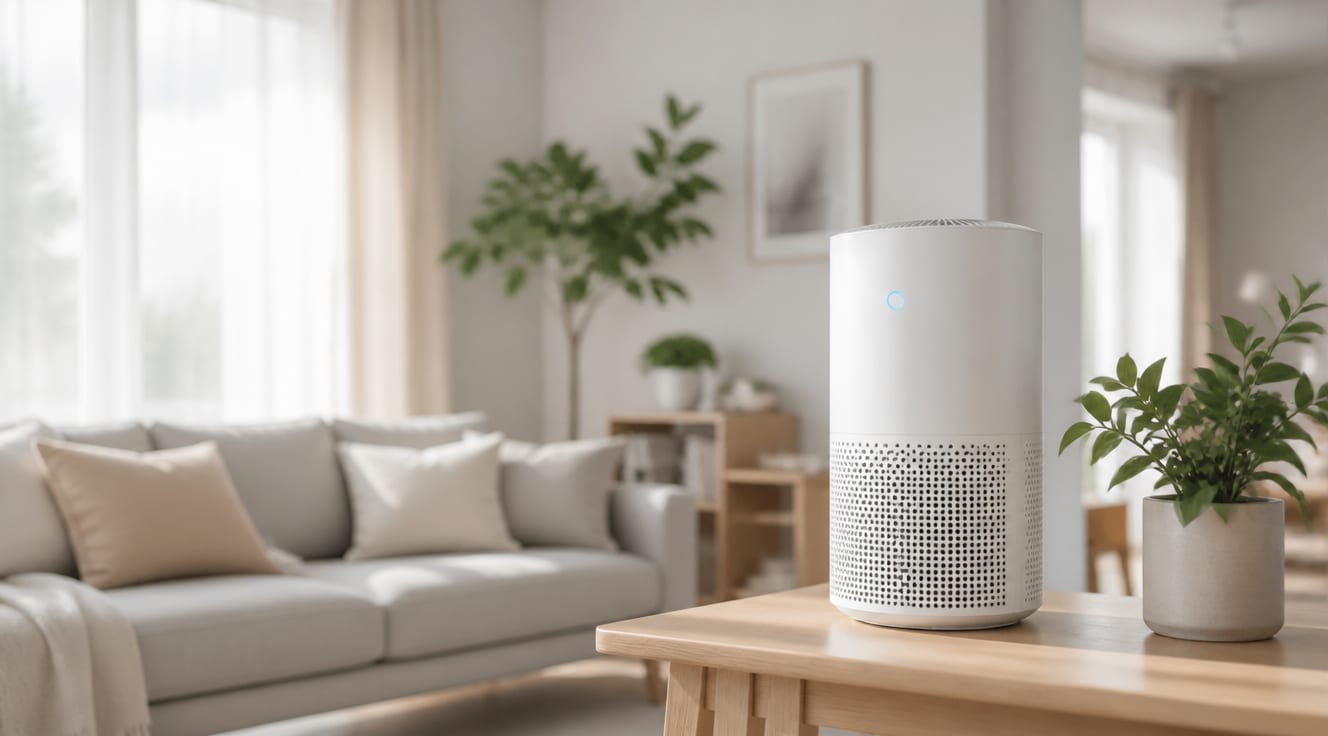
Choosing the right air purifier for your home starts with identifying the specific pollutants you need to remove and matching the device’s capacity to the size of your room. The best air purifier for your home isn’t the most expensive one, but the unit whose filter technology, Clean Air Delivery Rate (CADR), and coverage area align with your indoor air concerns—whether that’s allergens, pet dander, smoke, or fine particulate matter known as PM2.5.
Indoor air can be up to five times more polluted than outdoor air, according to the U.S. Environmental Protection Agency (EPA), making an effective air purifier a meaningful investment for families managing allergies, asthma, or daily exposure to dust and volatile organic compounds (VOCs).
What Pollutants Are Actually in Your Home?
Before comparing models, identify what you’re filtering. Most residential air purifiers target three categories of indoor air pollutants:
- Particulate matter (PM2.5 and PM10): dust, pollen, pet dander, and smoke.
- Gases and odors: VOCs released from paints, cleaning products, cooking, and new furniture.
- Biological contaminants: mold spores, bacteria, and certain airborne viruses.
A true HEPA filter captures 99.97% of particles as small as 0.3 microns, a standard established by the U.S. Department of Energy. If your main concern is gas-phase pollutants, however, you need an activated carbon layer as well—because HEPA alone won’t remove odors or chemical fumes.
How to Match an Air Purifier to Your Room Size
Undersizing is the single most common buying mistake. An air purifier rated for 200 square feet will underperform in a 350-square-foot living room, no matter how efficient its filter is.
Use this practical method:
- Measure your room’s length and width, then multiply to get square footage.
- Add 20% to that number if you have high ceilings (over 8 feet) or open doorways.
- Compare the result to the unit’s “recommended room size,” usually listed on the packaging or product page.
The Asthma and Allergy Foundation of America also recommends choosing a unit whose CADR is at least two-thirds of the room’s area in square feet. A purifier rated for a 350 sq ft space should therefore have a CADR of around 230 or higher.
Understanding CADR Ratings and Filter Types
CADR (Clean Air Delivery Rate) measures how quickly a purifier removes smoke, pollen, and dust from a standardized room. Higher numbers mean faster cleaning. AHAM verifies these ratings independently, so any unit bearing the AHAM seal has been third-party tested rather than relying on marketing claims.
Here’s a quick comparison of common filter technologies found in modern air purifiers:
| Filter Type | What It Captures | What It Doesn’t | Best For |
|---|---|---|---|
| True HEPA (H13/H14) | Pollen, dust, pet dander, smoke, some bacteria | Gases, odors, VOCs | Allergies and asthma |
| Activated Carbon | Odors, smoke, VOCs, chemicals | Most fine particles | Kitchens, smokers, new homes |
| Pre-Filter | Large particles, hair, lint | Fine particulates | Extending HEPA filter life |
| UV-C + HEPA Combo | Bacteria and some viruses (with HEPA) | UV alone misses most particles | Households with immune concerns |
A unit that combines a pre-filter, true HEPA, and activated carbon typically covers the broadest range of indoor pollutants without requiring separate machines.
Which Features Actually Matter for Your Home?
Beyond filters, several features separate a basic unit from one you’ll genuinely enjoy using day to day:
- Noise level (dB rating): Anything above 50 dB on the highest setting becomes disruptive in bedrooms. Look for units with a dedicated sleep mode under 30 dB.
- Smart sensors and auto mode: A purifier that ramps up when it detects poor air quality saves electricity and extends filter life.
- Filter replacement indicators: These prevent the common mistake of running a clogged filter, which can release captured pollutants back into the air.
- Energy consumption: ENERGY STAR-certified air purifiers use about 40% less energy than standard models, according to the EPA.
Real-World Example: A Family With Two Cats and a Newborn
A family in suburban Denver with two shedding cats and a three-month-old infant needed help managing dander and nursery odors. They initially bought a $90 HEPA-only tower unit for the living room.
Within three weeks, odors from the litter box remained strong, and the baby’s room still felt stuffy. After upgrading to a 400-square-foot unit with a thick activated carbon pre-filter and a CADR of 280, they noticed a measurable drop in PM2.5 (from 18 µg/m³ to 6 µg/m³) within 48 hours using a separate air quality monitor, less visible cat hair on surfaces, and a reported improvement in the mother’s seasonal allergy symptoms during week two.
The takeaway from this case study is clear: matching filter technology and room coverage to real conditions matters more than brand prestige or price tag.
Smart Buying Tips to Avoid Common Mistakes
Run through this checklist before clicking “buy”:
- Verify the AHAM seal for independently tested CADR instead of relying on marketing claims.
- Calculate annual filter replacement costs—some premium units run $80–$120 per year.
- Check noise ratings at multiple fan speeds, not just the lowest setting.
- Confirm warranty length and that replacement filters will remain available for at least 5 years.
- Avoid “ionizer-only” or “ozone-generating” models if anyone in the home has respiratory issues—the EPA warns these can worsen asthma symptoms.
How to Apply This Today
Start with a 10-minute audit: list the rooms you want to treat, measure the largest one, and note two specific concerns (for example, pet dander, cooking odors, or wildfire smoke). Then narrow your shortlist to three models with AHAM-verified CADR, room coverage roughly 20% above your largest space, and a true HEPA plus activated carbon combination.
Read the user manual before plugging the unit in, run it on auto mode for the first 48 hours, and replace filters on schedule rather than waiting for the indicator light to come on. This approach turns a confusing purchase into a targeted, evidence-based decision—and you’ll feel a difference in air quality within the first week.
Frequently Asked Questions
How often should I replace the filter in my air purifier?
Most true HEPA filters last 12 to 18 months with daily use, while activated carbon layers typically need replacement every 3 to 6 months. Check the manufacturer’s indicator, but also visually inspect the filter every three months—homes with pets or smokers usually reach the replacement threshold much faster.
Is an air purifier worth it if I don’t have allergies?
Yes, especially for filtering PM2.5 from wildfire smoke, traffic pollution that drifts in through windows, and VOCs from everyday household products. The World Health Organization estimates that 99% of the global population breathes air that exceeds recommended pollutant limits, so the benefits extend well beyond allergy sufferers.
What’s the difference between a HEPA-type and a true HEPA filter?
“HEPA-type” is a marketing term with no official standard and may capture far fewer particles. True HEPA must meet the U.S. Department of Energy standard of capturing 99.97% of particles at 0.3 microns. For households managing allergies or asthma, always insist on true HEPA.
Where should I place an air purifier in a room?
Position the unit at least 6 inches from walls and furniture, ideally near the source of pollution (kitchen, pet area, or workshop) but away from direct foot traffic. Central placement works best in large rooms so that clean air can circulate evenly throughout the space.
Do air purifiers use a lot of electricity?
Most residential units draw 50 to 100 watts on the high setting—roughly the same as a light bulb. On auto mode or the lowest fan speed, monthly operating costs usually fall under $2, making them affordable to run continuously.