

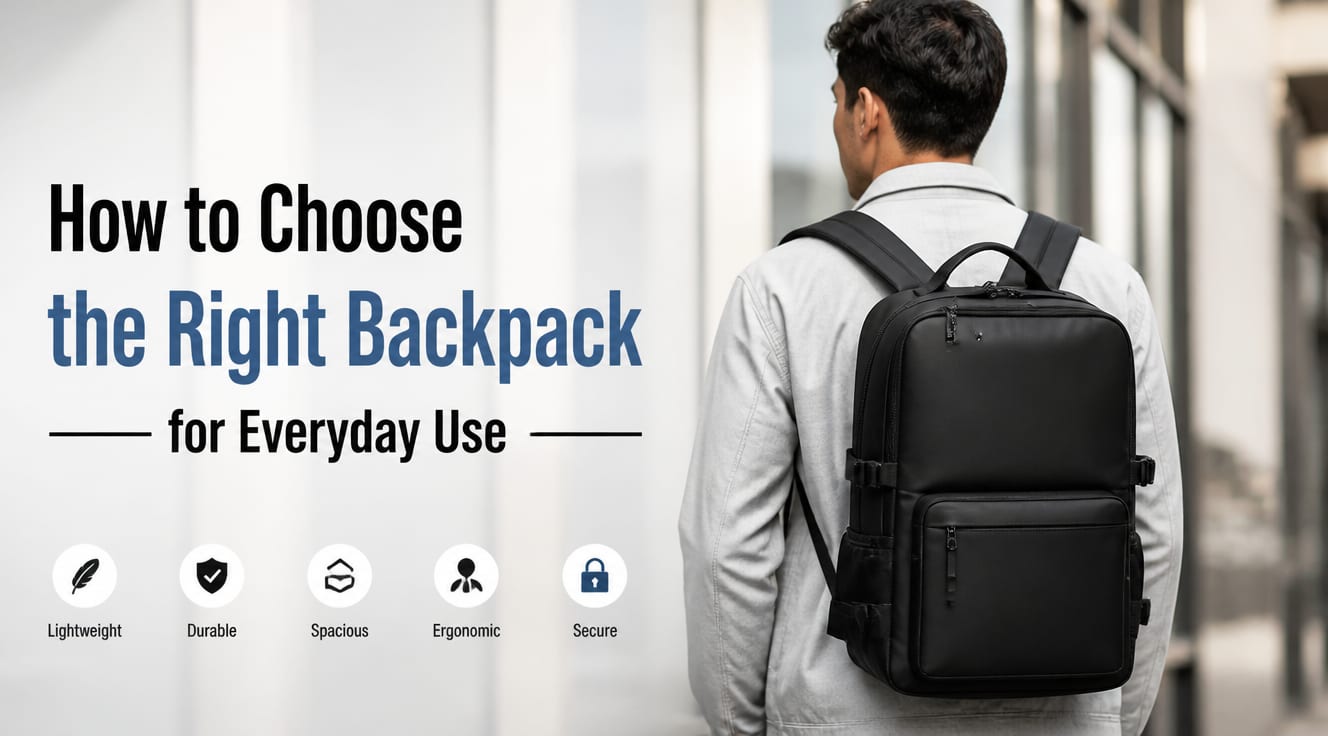
For most people, the best everyday backpack balances capacity, comfort, and durability without forcing you to choose between work and weekend use. Picking the right one comes down to matching your daily load, body type, and lifestyle — and skipping the trendy models that look great but fall apart after six months. Whether you’re commuting to an office, walking across a college campus, or running errands around town, this guide walks you through the exact criteria that separate a great everyday backpack from a frustrating one.
What Size Backpack Do You Really Need for Daily Use?
Backpack size is the single most overlooked factor when people shop for a daily backpack. Go too small and you’ll cram your laptop and lunch into a stretched zipper; go too large and you’ll haul dead space all day. Most daily users land between 15L and 25L.
According to a 2024 Statista survey, 67% of urban commuters prefer a backpack over a tote or shoulder bag, yet nearly half admit their current bag is the wrong size for their typical load.
- 10–15 liters: Best for short trips, light commuters, or anyone carrying only a tablet, notebook, and water bottle.
- 15–20 liters: The sweet spot for most office workers — fits a 13–14″ laptop, charger, lunch, and a light jacket.
- 20–25 liters: Ideal for students, hybrid workers, or anyone who also carries gym clothes or a camera.
- 25+ liters: Better suited for travel or hiking than daily commuting.
A quick rule: load your typical daily items into any bag, then measure the volume. If your gear fills less than half the bag, downsize; if it barely fits with the zipper straining, go up one size.
Which Backpack Features Matter Most for Everyday Carry?
Beyond size, the features below separate a mediocre commuter backpack from one you’ll carry for years. Prioritize these in order:
- Padded laptop compartment — A dedicated, suspended sleeve protects devices from drops and pressure. According to 2023 consumer data by Statista, laptops are the most commonly damaged item in backpack-related incidents worldwide.
- Ergonomic shoulder straps and back panel — Look for contoured, padded straps and a breathable mesh back. The American Chiropractic Association reports that roughly 80% of adults experience back pain at some point, often worsened by poorly designed bags.
- Quick-access top or front pocket — Saves you from digging through your bag for keys, wallet, or transit cards.
- External water bottle pocket — Keeps liquids upright and away from electronics.
- Durable, water-resistant fabric — Coated nylon or polyester (600D–1000D) handles rain and daily abrasion.
How to Evaluate Backpack Materials and Build Quality
Material quality determines how long your everyday carry backpack will actually last. The cheapest models often use 300D polyester and plastic zippers that fail within a year. Spend time on these checks before you buy:
- Fabric denier (D): 600D and above is suitable for daily wear; 1000D+ indicates heavy-duty construction.
- Zippers: YKK or SBS zippers are the industry standard — avoid no-name slides that snag or split.
- Stitching: Double-stitched or bar-tacked stress points at strap anchors and bottom corners extend bag life dramatically.
- Lining: A light interior lining helps you see contents in low light.
The global backpack market reached $9.2 billion in 2023, according to Grand View Research, with premium materials driving nearly 30% of consumer spending. That trend shows up because replacing a cheap bag every 18 months costs more than buying one well-built bag that lasts five years.
Comparing the Best Everyday Backpack Types
Not all backpacks for everyday use are built for the same job. Use this comparison to match a bag style to your routine:
| Backpack Type | Best For | Typical Capacity | Key Strength |
|---|---|---|---|
| Classic Daypack | Errands, light commuting | 10–18L | Lightweight simplicity |
| Tech / Laptop Backpack | Office workers, students | 18–25L | Padded device protection |
| Roll-Top Backpack | Flexible load, commuters | 15–22L (expandable) | Adjustable capacity |
| Hybrid Travel Pack | Hybrid work + short trips | 22–30L | Carry-on compatibility |
| Convertible 2-in-1 | Mixed business/casual | 15–20L | Looks like a briefcase or tote |
Real-World Example: How a Freelance Designer Uses Her Everyday Backpack
Meet Sara, a 32-year-old freelance graphic designer who works between a co-working space and client cafés. She needed an everyday backpack that could carry a 16″ laptop, sketchbook, drawing tablet, headphones, and a change of clothes for evening yoga.
Sara first bought a 12L mini-backpack — it looked great but couldn’t fit her laptop and charger without bulging. She returned it for a 22L roll-top pack with a 16″ padded sleeve, magnetic closures, and a hidden zip pocket for valuables. She also chose a bag with breathable mesh shoulder straps because she walks roughly 8,000 steps a day.
Eighteen months later, the bag still looks new, her back pain has dropped noticeably, and she’s saved money by not replacing cheaper models. Sara’s case illustrates the core rule: match capacity to real load, then prioritize comfort.
What Mistakes Should You Avoid When Choosing a Daily Backpack?
Even experienced buyers run into these traps. Avoid them and you’ll save money and frustration:
- Buying for looks first. A bag that doesn’t fit your laptop or daily items is useless, no matter the color.
- Ignoring strap ergonomics. Thin straps dig into shoulders; padded, contoured straps distribute weight across your back.
- Skipping the in-store test. Always load the bag with realistic weight before buying — most stores allow this.
- Choosing the cheapest option. A $25 backpack typically lasts 12–18 months; a $90–$150 backpack often lasts 4–5 years.
- Overlooking warranty. Reliable brands offer 2–10 year warranties, a strong signal of build quality.
How to Pick Your Perfect Everyday Backpack Starting Today
You don’t need to browse 50 models — you need a simple decision process. Do these three things before you open your wallet:
- Audit your daily load. List every item you carry on a typical day, plus its volume and weight.
- Match capacity to load. Use the size guide above to pick the correct liter range for your list.
- Test the bag in person. Load it with realistic weight, walk for ten minutes, and check shoulder comfort, back support, and access to pockets.
If a backpack passes all three checks, you’ve found a backpack for everyday use that should serve you well for years.
Frequently Asked Questions
What is the best backpack size for everyday use?
For most people, 15L to 22L is the sweet spot. It fits a 13–15″ laptop, a charger, lunch, a light jacket, and personal items without feeling bulky. Choose 10L if you carry very little, or 25L+ if you also pack gym gear or a camera.
How do I clean and maintain an everyday backpack?
Spot-clean with mild soap and a damp cloth every few weeks. Most fabric backpacks can be hand-washed in cold water and air-dried — avoid machine dryers, which damage padding and coatings. Treat sticky zippers with beeswax or a silicone spray.
Are expensive backpacks worth the money?
Yes, when the price reflects better materials, ergonomic design, and warranty support. A $90–$180 backpack from a reputable brand often outlasts three or four cheaper bags, lowering your total cost over time.
What backpack material is best for daily commuting?
Coated 600D–1000D nylon or polyester with YKK zippers offers the best balance of weight, water resistance, and durability. Leather looks premium but is heavier and needs more care; canvas is sturdy but absorbs water unless treated.
Can one backpack work for both work and weekend use?
Absolutely. A neutral 18–22L roll-top or tech backpack in black, navy, or grey easily transitions from office to weekend. The key is a clean exterior design, no loud logos, and enough capacity to hold a jacket and snacks on day trips.