

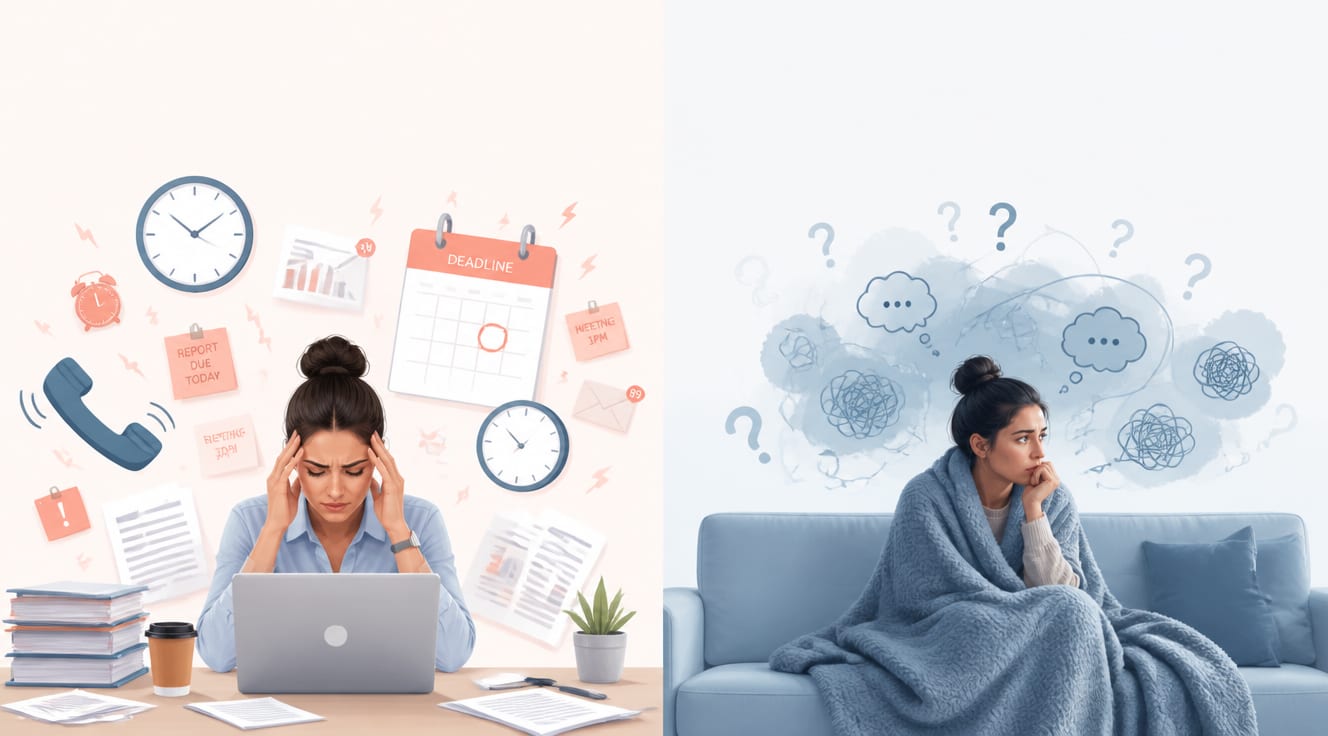
Stress and anxiety are often used interchangeably, but they are not the same thing. Stress is your body’s natural response to an external trigger like a deadline, an argument, or a financial problem, and it usually fades once the situation resolves. Anxiety, on the other hand, is an internal reaction that often persists without a clear cause and can linger for weeks or months. Understanding the difference between stress and anxiety is the first step toward knowing when everyday pressure crosses into a territory that requires professional attention.
What Is Stress and How Does It Affect Your Body?
Stress is a physiological and emotional reaction to a specific, identifiable demand or threat. Your nervous system activates the “fight-or-flight” response, releasing cortisol and adrenaline to help you cope with the challenge in front of you. Once the trigger disappears, your body typically returns to its baseline state within hours or days.
Common external stressors include:
- Work deadlines and job insecurity
- Relationship conflicts
- Financial pressure
- Major life changes such as moving or divorce
- Health concerns affecting you or a loved one
According to the American Psychological Association, 77% of people in the United States regularly experience physical symptoms caused by stress, including headaches, fatigue, and muscle tension. Stress is, in essence, a normal and often helpful response, as long as it remains temporary and manageable.
What Is Anxiety and Why Does It Feel Different?
Anxiety is a persistent feeling of apprehension, worry, or dread that does not always have an obvious external cause. While stress is tied to a specific event, anxiety often feels free-floating, intrusive, and difficult to control. It can show up at rest, during sleep, or in situations that pose no real threat.
Anxiety disorders are among the most common mental health conditions worldwide. The World Health Organization estimates that 301 million people globally were living with an anxiety disorder in 2019, making it the most prevalent mental health condition on the planet. Unlike everyday stress, clinical anxiety can interfere with work, relationships, and daily functioning for extended periods.
Stress vs Anxiety: A Side-by-Side Comparison
The table below highlights the core differences between stress and anxiety so you can quickly identify what you are experiencing.
| Feature | Stress | Anxiety |
|---|---|---|
| Trigger | External, identifiable cause | Internal, often unclear or persistent |
| Duration | Short-term, tied to the event | Long-term, can last weeks or months |
| Physical symptoms | Headaches, muscle tension, fatigue | Heart palpitations, shortness of breath, dizziness |
| Mental symptoms | Irritability, feeling overwhelmed | Excessive worry, racing thoughts, fear |
| Response to trigger removal | Symptoms usually fade | Symptoms often remain |
| Impact on daily life | Manageable, temporary | Disruptive, persistent |
When Does Normal Stress Become an Anxiety Disorder?
Stress becomes a concern when it stops being a reaction and starts becoming a state of being. If you notice that your worry, tension, or physical symptoms continue long after the original stressor has disappeared, you may be dealing with more than ordinary stress. Chronic stress that goes unaddressed can evolve into generalized anxiety disorder (GAD), panic disorder, or other anxiety-related conditions.
Watch for these transition signs:
- You feel on edge even when nothing is happening.
- You cannot stop worrying, even about small things.
- You avoid people, places, or activities out of fear.
- You experience panic attacks with chest pain or breathing difficulty.
- Your sleep, appetite, or concentration has changed for weeks.
Warning Signs You Should Never Ignore
Some symptoms signal that anxiety has moved beyond a manageable level and into clinical territory. The Anxiety and Depression Association of America reports that anxiety disorders affect roughly 40 million adults in the United States, yet only 36.9% of those individuals receive treatment. Ignoring the warning signs can lead to worsening mental and physical health over time.
Red flags that warrant professional attention include:
- Persistent feelings of dread lasting more than six months
- Panic attacks that recur without warning
- Avoidance behavior that limits your daily activities
- Physical symptoms such as chest tightness, trembling, or gastrointestinal distress
- Use of alcohol, food, or substances to self-medicate
Real-World Example: Sarah’s Story
Sarah, a 34-year-old project manager, began feeling pressure two months before a major company audit. She experienced headaches, poor sleep, and irritability, classic signs of stress. Once the audit ended, however, her symptoms did not go away. She found herself worrying constantly about future projects, waking up with a racing heart, and avoiding meetings out of fear of being judged.
After six months of persistent symptoms, Sarah consulted a therapist and was diagnosed with generalized anxiety disorder. Through cognitive-behavioral therapy and lifestyle changes, she learned to distinguish between productive stress and harmful anxiety. Her case illustrates how untreated chronic stress can quietly evolve into a diagnosable anxiety disorder, even in high-functioning individuals.
How to Tell If You Need Professional Help
If your symptoms last longer than two weeks, interfere with your job or relationships, or cause you to change your behavior to avoid discomfort, it is time to seek support. A licensed mental health professional can screen for anxiety disorders, recommend therapy, and, when appropriate, discuss medication options. Early intervention dramatically improves long-term outcomes and reduces the risk of complications such as depression or substance abuse.
How to Apply This Starting Today
You do not need to wait for a crisis to take action. Start with these practical steps to better manage stress and reduce the risk of anxiety taking over:
- Track your symptoms in a journal for one week to identify patterns and triggers.
- Practice the 4-7-8 breathing technique twice daily to calm your nervous system.
- Limit caffeine and alcohol, both of which can amplify anxiety symptoms.
- Schedule 30 minutes of physical activity most days of the week.
- Book an appointment with a therapist if symptoms persist beyond two weeks.
Recognizing the difference between stress and anxiety empowers you to respond with the right strategy at the right time. Small, consistent actions today can prevent tomorrow’s mental health crisis.
Întrebări frecvente
Can stress turn into anxiety over time?
Yes. Chronic, unmanaged stress can develop into an anxiety disorder, especially when the body’s stress response stays activated for months without recovery. This is why early stress management is so important for long-term mental health.
How do I know if I have an anxiety disorder?
If you experience excessive worry, physical symptoms like a racing heart, or avoidance behavior for more than six months, you may meet the criteria for an anxiety disorder. Only a qualified mental health professional can provide a formal diagnosis.
Are stress and anxiety treated differently?
Often, yes. Stress is typically managed through lifestyle changes, time management, and relaxation techniques. Anxiety disorders usually require a combination of therapy, such as cognitive-behavioral therapy, and sometimes medication prescribed by a doctor.
Can anxiety occur without any obvious cause?
Absolutely. Unlike stress, which is tied to a specific trigger, anxiety can appear without any identifiable cause. This is one of the key differences between stress and anxiety and a hallmark of generalized anxiety disorder.
When should I see a doctor about my anxiety?
You should see a doctor or mental health professional if your anxiety symptoms last more than two weeks, interfere with daily life, cause panic attacks, or lead you to use substances to cope. Early treatment leads to better outcomes.