

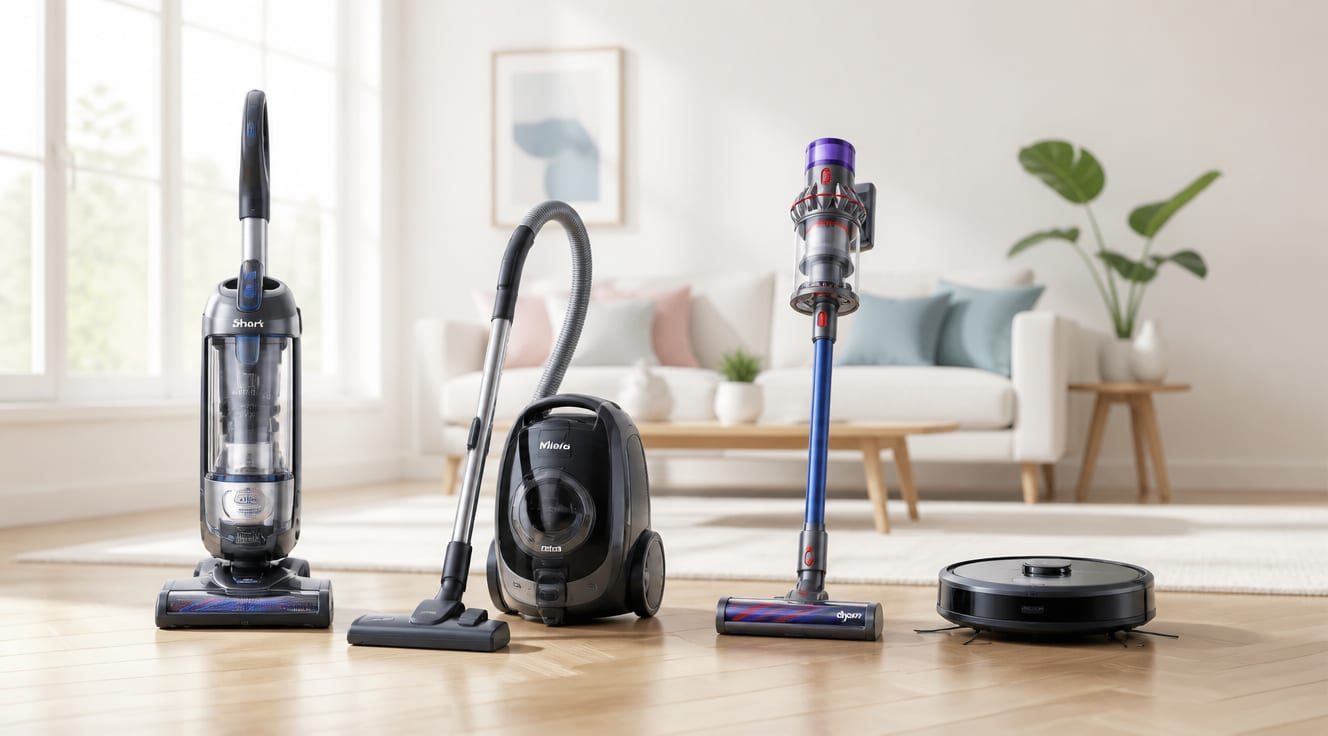
Choosing a good vacuum cleaner starts with matching the machine to your floor type, home size, and daily cleaning habits. The right model cuts cleaning time, improves indoor air quality, and lasts 8–10 years without losing suction. Focus on suction power (measured in air watts or Pa), filtration type, weight, and whether you need a corded or cordless design before comparing brands or prices.
What Type of Vacuum Cleaner Matches Your Home?
Vacuum cleaners fall into four main categories, and each one solves a different problem. Picking the wrong type is the single biggest reason buyers regret their purchase within the first six months.
- Upright vacuums work best on wall-to-wall carpet and large open floor plans. They stand upright on their own and store easily in a closet.
- Canister vacuums excel on hardwood, tile, and mixed surfaces. The wheeled body stays behind you while a long wand reaches under furniture.
- Cordless stick vacuums are ideal for quick daily cleanups, small apartments, and homes without heavy carpeting. Battery life now ranges from 20 to 60 minutes per charge.
- Robot vacuums handle maintenance cleaning on a schedule. They are not a full replacement for a deep-cleaning machine but reduce how often you need one.
According to a 2024 Statista survey, 38% of U.S. households now own at least two vacuum cleaners, usually pairing a robot with a traditional upright or canister model.
Which Features Matter Most When Buying a Vacuum Cleaner?
Once you know the type, evaluate these five features. Skipping any of them usually leads to a poor purchase decision.
- Suction power: Look for at least 150 air watts for carpets and 80 air watts for hard floors. Cordless models should deliver at least 100 Pa of sustained suction, not just peak numbers.
- Filtration: A sealed HEPA filter traps 99.97% of particles down to 0.3 microns. This is critical for allergy sufferers and homes with pets.
- Weight and ergonomics: A vacuum over 15 lbs causes wrist and back strain. Cordless sticks under 8 lbs are easiest to carry upstairs.
- Bin or bag capacity: Bagless bins save ongoing costs but release dust when emptied. Bags hold more and keep allergens contained.
- Noise level: Anything above 75 dB is loud enough to disturb neighbors in apartments. Quieter models run between 60–70 dB.
How Much Should You Spend on a Quality Vacuum?
Price does not always equal quality, but extremely cheap vacuums under $80 tend to lose suction within a year. Consumer Reports testing shows that mid-range vacuums between $200 and $400 deliver roughly 85% of the cleaning performance of premium models costing $700 or more. The sweet spot for most households is $250–$500. Spend more only if you have specific needs like heavy pet hair, large square footage, or strict allergy requirements.
Vacuum Cleaner Comparison: Upright vs. Canister vs. Cordless vs. Robot
The table below breaks down the four main types by performance, cost, and best use case. Use it to narrow your shortlist before reading individual reviews.
| Type | Average Price | Best For | Pros | Cons |
|---|---|---|---|---|
| Upright | $150–$600 | Carpet, large homes | Strong suction, large bins | Heavy, hard to maneuver on stairs |
| Canister | $200–$800 | Hardwood, mixed floors | Versatile, quiet, great filtration | Bulky body, more parts to store |
| Cordless Stick | $150–$700 | Apartments, quick cleanups | Lightweight, easy to grab | Limited battery, smaller bin |
| Robot | $200–$1,000 | Maintenance cleaning | Automated, schedules itself | Weak deep cleaning, gets stuck |
What Mistakes Do Buyers Make When Choosing a Vacuum?
Most returns happen for the same predictable reasons. Avoid these five common errors before you click “buy.”
- Buying by brand alone: A well-known brand’s entry-level model often performs worse than a mid-tier competitor.
- Ignoring floor type: A powerful carpet vacuum is overkill on hardwood and may scratch delicate surfaces.
- Underestimating storage space: Canister vacuums need room for the body, wand, and attachments.
- Choosing peak suction over sustained suction: Cordless models advertise peak numbers that drop once the battery drains.
- Skipping the warranty: A solid warranty covers motor and battery failures, which are the most expensive parts to replace.
Real-World Example: How One Family Cut Cleaning Time by 40%
The Patel family in Austin, Texas owned a single upright vacuum for seven years. With two kids and a shedding dog, they vacuumed daily and still felt the floors were dirty. In early 2024, they bought a $350 cordless stick for daily kitchen and living room touch-ups and kept their old upright for weekly deep cleans. Within three months, their average cleaning time dropped from 45 minutes to 27 minutes per session, and allergy symptoms for their son dropped noticeably. The total investment was $350 plus the cost of the existing upright, which they still use once a week. This two-vacuum strategy is now recommended by cleaning professionals at the American Cleaning Institute for households over 1,500 square feet.
How to Apply This Starting Today
Start by measuring your home’s square footage and listing your floor types. Then set a realistic budget between $250 and $500, which covers 90% of quality options on the market. Shortlist three models that match your floor type, read at least two verified owner reviews for each, and check the return policy before paying. If you can, test the weight and noise level in a physical store. Within an hour, you will have a confident shortlist ready to buy.
Frequently Asked Questions
How often should you replace a vacuum cleaner?
Most quality vacuums last 8–10 years with regular maintenance. Replace the filter every 6–12 months and the brush roll every 2–3 years. If suction drops even after cleaning the filters, the motor is likely failing and replacement is more cost-effective than repair.
Are cordless vacuums powerful enough for carpets?
Modern cordless vacuums with 100+ Pa of sustained suction handle low- and medium-pile carpets well. For high-pile or plush carpets, a corded upright or canister still delivers stronger, more consistent airflow. A 2023 review by Wirecutter found that top cordless models removed 78% of embedded debris from medium-pile carpet, compared to 92% for corded uprights.
Is a HEPA filter really necessary?
A HEPA filter is essential if anyone in your home has asthma, allergies, or pets. It captures particles that standard filters release back into the air. For households without these concerns, a standard filter is acceptable, but HEPA models add only $30–$50 to the price and noticeably improve air quality.
What is the best vacuum cleaner for pet hair?
Look for a model with a motorized brush roll, tangle-free design, and strong suction above 150 air watts. Canister vacuums with dedicated pet tools and uprights with anti-hair wrap brushes perform best. Brands like Miele, Dyson, and Shark consistently rank highest in pet hair pickup tests conducted by Good Housekeeping.
Should you buy a bagged or bagless vacuum?
Bagged vacuums hold more debris, seal in allergens, and require less frequent emptying. Bagless models save money on bags but need regular filter cleaning and can release dust when emptied. Allergy sufferers benefit more from bagged systems, while budget-focused buyers usually prefer bagless.