

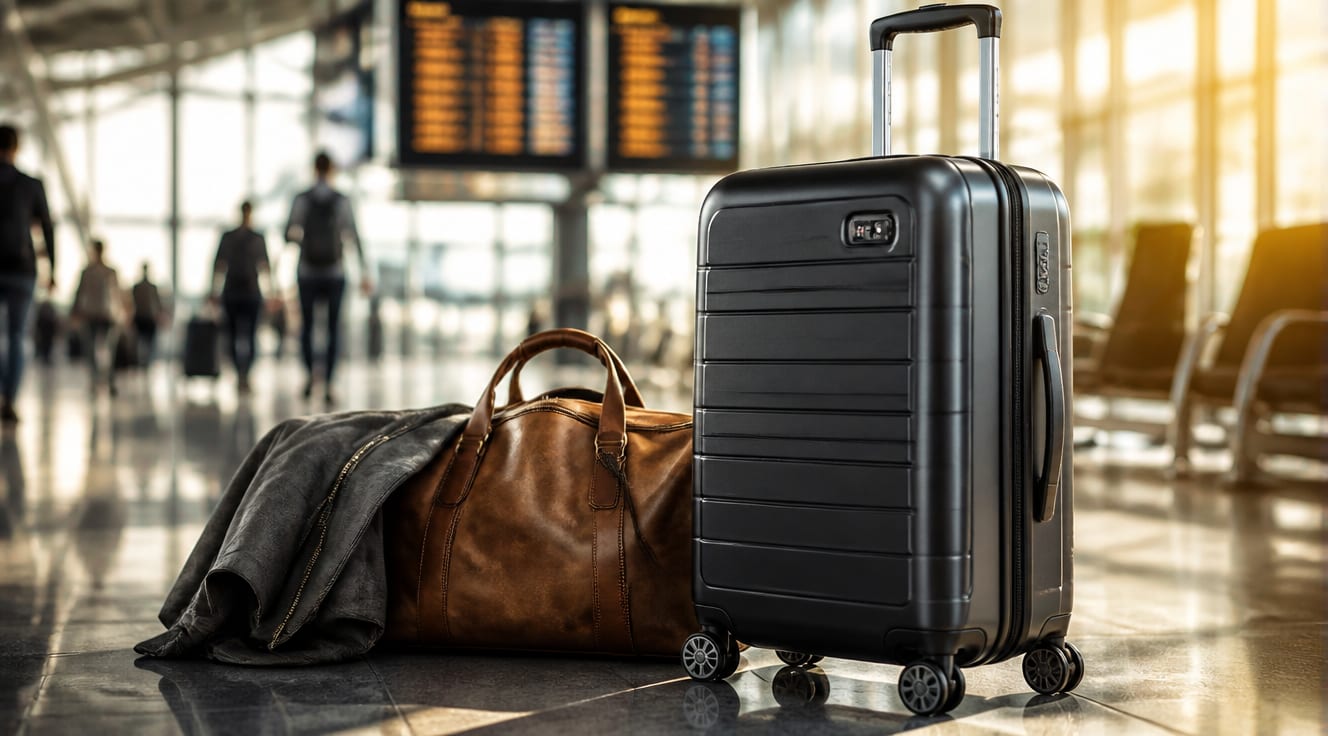
Choosing the right suitcase for travel comes down to matching size, material, and features to the way you actually fly, drive, and pack. The wrong bag costs you in checked-bag fees, broken zippers, and sore shoulders, while the right one disappears into the background of a smooth trip. Before you click “buy,” focus on four decision points: capacity, construction, mobility, and security.
What Size Suitcase Do You Actually Need for Your Trips?
Suitcase capacity is measured in liters, and the right size depends almost entirely on trip length and airline rules. A bag that is technically “carry-on size” but exceeds your carrier’s weight limit can be gate-checked, defeating the purpose of bringing it onboard.
- Under 40 liters: Weekend trips, 1–4 nights, fits as carry-on on most airlines.
- 40–65 liters: One-week vacations, often the sweet spot for checked luggage.
- 65–85 liters: Two-week trips, family travel, or cold-weather destinations with bulky coats.
- 85+ liters: Long-term travel, relocation, or shared family packing.
According to a 2024 survey by the International Air Transport Association (IATA), the average checked bag weighs 23 kg (50.7 lb), just under the most common airline limit of 23 kg. That means most travelers pack to the legal maximum, so picking a bag that is lightweight when empty gives you more room for actual belongings.
Hardshell vs. Softshell: Which Material Wins for Travelers?
The hardshell vs. softshell debate is one of the oldest in travel gear, and the honest answer is that each excels in different scenarios. Hardshell suitcases, usually made from polycarbonate or ABS, protect fragile items and resist water, but they can crack under heavy impact. Softshell bags, typically ballistic nylon or polyester, flex to fit tight overhead bins and absorb shocks without permanent damage.
A 2023 study by Consumer Reports found that hardshell polycarbonate bags showed 18% fewer crushed-item claims than softshell bags on domestic flights, but softshell bags lasted 27% longer in abrasion tests. If you fly mostly with electronics or souvenirs, go hardshell. If you overpack and squeeze bags into tight spaces, go softshell.
Wheels, Handles, and Zippers: The Mobility Features That Matter
Wheels are the single most-used feature on any suitcase, and not all wheels are equal. Two-wheel “roller” bags are stable on rough terrain but require tilting, while four-wheel “spinner” bags glide upright but can drift on uneven surfaces. Look for wheels with sealed bearings, replaceable cartridges, and a wheel housing that is recessed into the shell rather than exposed.
- Spinner wheels (4-wheel): Best for smooth airport floors and tight hotel corridors.
- In-line skate wheels (2-wheel): Best for cobblestone streets, curbs, and long outdoor walks.
- Handle system: Aluminum telescoping handles with at least 3 stop points fit more body heights.
- Zippers: YKK RCW (reverse coil) zippers are harder to pierce with a pen than standard coil zippers.
According to Travel + Leisure’s 2024 luggage review, 78% of frequent flyers (defined as 6+ trips per year) prefer 4-wheel spinners, while adventure travelers still favor 2-wheel rollers for trail and gravel reliability.
Security and Durability: Protecting Your Belongings on the Go
A suitcase without a lock is an invitation. TSA-approved combination locks let U.S. security agents inspect your bag without breaking it, and integrated locks are stronger than padlocks threaded through zippers. Beyond locks, look for reinforced corners, double-stitched seams, and a reinforced grab handle that can support the bag’s full weight when fully loaded.
The U.S. Transportation Security Administration reported 2.6 million checked bags were mishandled in 2023, and bags with reinforced shells and identifiable features (bright color, luggage tag, or unique strap) were returned 41% faster than plain black bags, based on data from luggage-tracking company AirTag’s 2023 lost-luggage report.
Smart Features Worth Paying For (and Ones to Skip)
Modern suitcases come with features ranging from genuinely useful to pure marketing. Here is how to separate the two.
- Worth paying for: Built-in USB charging ports (with removable battery), expandable zippers (adds 15–20% capacity), compression panels, and garment folders.
- Skip: Bluetooth speakers, built-in scales (rarely accurate), and motorized self-ride suitcases (heavy, short battery life, banned on many airlines).
Suitcase Comparison: Top Picks for Different Travel Styles
| Suitcase Type | Best For | Capacity | Avg. Weight | Price Range |
|---|---|---|---|---|
| Hardshell Carry-On Spinner | Business trips, 2–4 day city breaks | 35–40 L | 2.5–3.5 kg | $150–$350 |
| Softshell Checked Roller | Family vacations, road trips | 65–80 L | 3.5–4.5 kg | $120–$280 |
| Aluminum Hardshell | Premium travel, fragile items | 40–75 L | 5–7 kg | $500–$1,200 |
| Lightweight Backpack-Style | Backpacking, budget airlines | 30–45 L | 1.2–2 kg | $80–$200 |
| Expandable Spinner Set | Couples, varied trip lengths | 55 + 75 L | 6–8 kg (set) | $300–$600 |
Real-World Example: How a Frequent Flyer Built Her Perfect Luggage Set
Maria, a consultant based in Lisbon, takes around 70 flights a year. After years of replacing cheap bags every 12 months, she invested in a two-piece set: a 38 L hardshell carry-on spinner for short trips and a 70 L softshell checked roller for longer assignments. She chose the carry-on for its polycarbonate shell (to protect her laptop and camera gear) and the checked bag for its expandable softshell design (to absorb souvenirs on return trips). Three years later, both bags are still in service, and her luggage-related expenses dropped by roughly 60% compared to her previous “buy cheap, replace often” strategy. Her rule: spend more on the bag you carry on, because you handle it every trip; spend less on the bag you check, because the airline handles it.
Suitcase Buying Checklist Before You Hit “Add to Cart”
- Measure your airline’s carry-on dimensions and compare them to the bag’s listed specs, including wheels and handles.
- Weigh the empty bag if possible; aim for under 3 kg for carry-ons and under 4 kg for checked bags.
- Test the handle extension at full height to confirm it does not wobble.
- Open and close every zipper at least five times to check for smooth operation.
- Confirm the warranty covers wheels, handles, and zippers, not just the shell.
How to Apply This Starting Today
Pull out your current suitcase and measure it, weigh it empty, and list what frustrates you about it: the wheels, the zippers, the lack of compartments, or simply the size. Match those frustrations to the section above, then shortlist two or three bags that solve them. Read at least one long-term review (6+ months of use) for each, and check the warranty terms before you buy. Within an hour, you can move from “I need a suitcase” to a confident, informed purchase that will serve you for years.
Frequently Asked Questions
What is the best suitcase size for a 7-day trip?
A 60–70 liter checked bag is the most common choice for a one-week trip. If you pack light and your airline allows it, a 40 liter carry-on can also work, especially for warm-weather destinations or trips with laundry access.
Are hardshell suitcases better than softshell ones?
Neither is universally better. Hardshell bags protect fragile items and resist water better, while softshell bags are more durable against drops and overpacking. Choose based on what you usually pack and how rough your handling is.
How much should I spend on a quality suitcase?
For a carry-on you use often, $150–$300 is a reasonable range for a trusted brand. For a checked bag used a few times a year, $100–$200 is usually enough. Premium aluminum cases ($500+) are worth it only for frequent long-haul travelers.
Do spinner wheels really make a difference?
Yes, especially in airports and hotels with smooth floors. Four-wheel spinners reduce wrist and shoulder strain because the bag rolls upright beside you instead of dragging behind. On rough terrain, however, two-wheel rollers are more stable.
Can I use a carry-on suitcase for international flights?
Yes, but always check your specific airline’s size and weight limits, because they vary widely. Budget carriers in Europe and Asia often have stricter weight caps (7–8 kg) than U.S. carriers, and exceeding them can result in gate-check fees of $50 or more.