

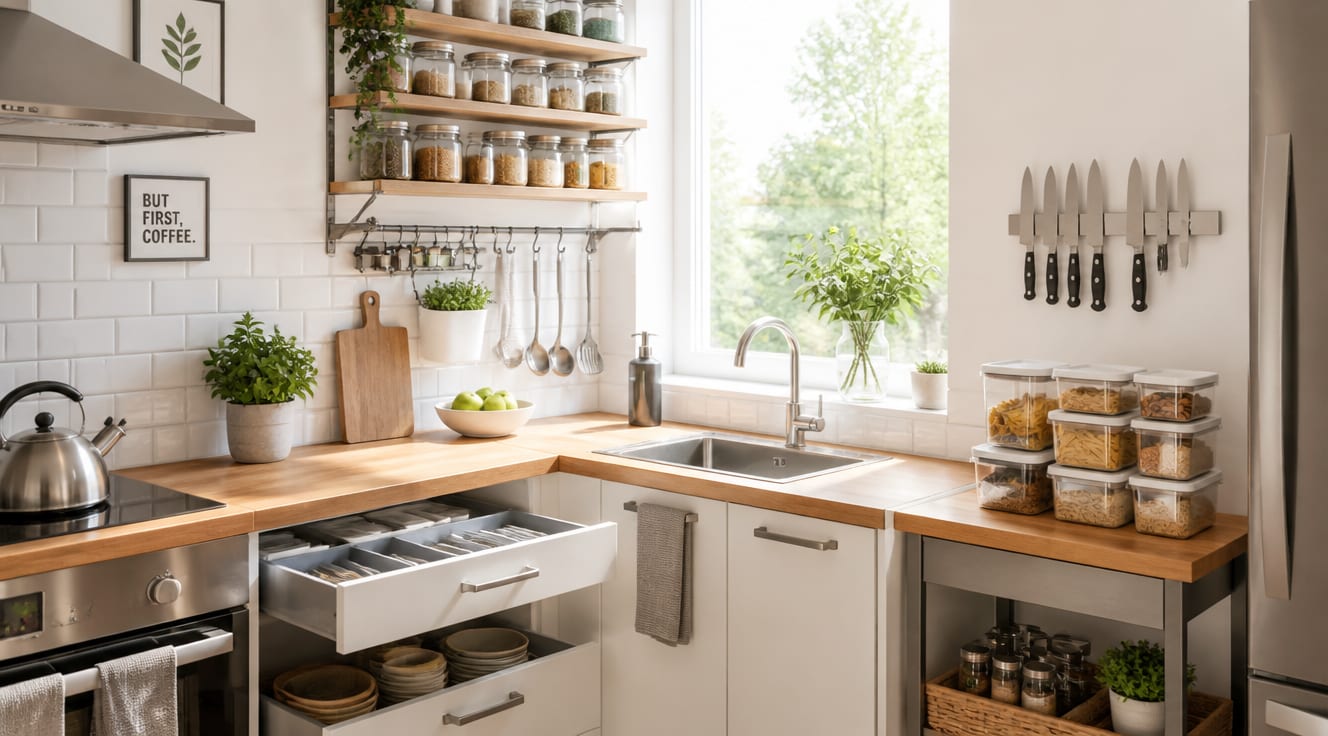
Organizing a small kitchen starts with three priorities: decluttering, zoning, and using vertical space. Most homeowners waste up to 30% of available storage because items are placed randomly rather than by function. A well-planned small kitchen can hold as much as a poorly organized large one when every inch is used strategically.
The average kitchen in a new American home has shrunk from around 250 square feet in the 1970s to roughly 161 square feet today, according to the National Association of Home Builders. With less space and more gadgets than ever, learning how to organize a small kitchen has become a practical necessity rather than a luxury. The good news: a few targeted changes can transform a cramped cooking area into a highly functional workspace.
Why Organizing a Small Kitchen Pays Off Immediately
A Princeton University Neuroscience Institute study (McMains & Kastner, 2009) found that physical clutter competes for attention and reduces the brain’s ability to focus. In a kitchen, that means slower meal prep, more forgotten ingredients, and higher stress during cooking. When you organize a small kitchen well, you reduce visual noise and create faster workflows.
Houzz’s 2023 U.S. Kitchen Trends Study reports that 87% of homeowners rank storage and organization among the top three priorities when renovating. Investing time in the right layout now saves both money and frustration later. Below are the core benefits a smart layout delivers:
- Faster meal prep through grouped tools and ingredients
- Lower grocery bills because you can actually see what you own
- Reduced food waste from forgotten items at the back of cabinets
- Easier cleaning with fewer surfaces crowded by objects
- Higher home value when the kitchen looks intentional and spacious
What Storage Solutions Actually Work in a Small Kitchen?
Not all small kitchen organization products are worth the money. Based on user reviews across major retailers and professional organizer recommendations, here is a realistic comparison of the most common solutions:
| Solution | Best For | Average Cost | Space Impact | Verdict |
|---|---|---|---|---|
| Pull-out cabinet shelves | Deep lower cabinets | $25–$80 per shelf | Up to 50% more usable space | Excellent ROI |
| Door-mounted racks | Pans, lids, cleaning supplies | $10–$40 | Frees one shelf minimum | Great for renters |
| Magnetic knife strips | Replacing counter knife blocks | $15–$60 | Reclaims about 1 sq ft of counter | Best for small kitchens |
| Stackable shelf risers | Pantry items, spices | $8–$25 | Doubles shelf capacity | Cheap and effective |
| Over-the-sink cutting boards | Counter space in galley kitchens | $20–$50 | Adds a prep surface | Very high impact |
The fastest win for most people is installing pull-out shelves inside lower cabinets. A 2022 survey by the National Association of Professional Organizers found that 72% of clients considered drawer and cabinet interior upgrades the single biggest improvement to their daily routine.
How Do You Declutter a Small Kitchen Step by Step?
Before buying any product, you need fewer things. Decluttering is the foundation when you organize a small kitchen, because storage only multiplies what you already own. Follow this sequence:
- Empty one zone at a time (spices, bakeware, utensils, gadgets). Do not empty the whole kitchen at once; it leads to decision fatigue.
- Use a three-pile method: keep, donate, relocate. Anything unused for 12 months goes out.
- Clean the empty shelves with a mild degreaser before anything goes back.
- Reinsert items by frequency of use: daily items at eye level, weekly items on lower shelves, rarely used items up high.
- Label shelves or bins so the system survives the next shopping trip.
For households that cook three to four nights a week, this process typically takes three to four hours spread over a weekend. For heavier users or larger families, plan a full day.
How to Use Vertical Space and Smart Zones in a Tiny Kitchen
Horizontal space is limited in a small kitchen, so vertical storage becomes the priority. Walls, cabinet doors, and the space above the refrigerator are underused real estate.
- Mount a pegboard on an empty wall for pots, pans, and utensils. It costs around $30 and can replace an entire cabinet.
- Add two or three floating shelves for spices and daily-use mugs, freeing up valuable cabinet space.
- Install a tension rod inside cabinets to hang spray bottles vertically.
- Use the side of the refrigerator for magnetic spice tins or a narrow paper towel holder.
- Hang a small rail system inside a pantry door for measuring cups and small tools.
Zoning is the second pillar. Group items by activity, not by category. Keep coffee supplies near the kettle. Store cutting boards and knives together. Place baking sheets and mixing bowls near the oven. This reduces walking distance during cooking, which in a small galley kitchen can mean the difference between one step and five.
Real Example: Turning a 60-Square-Foot Galley Kitchen Into a Functional Space
In a recent case study published on the Houzz platform, a couple in Brooklyn reorganized a 60-square-foot galley kitchen for under $400. Their situation was typical: two adults working from home, frequent home cooking, and no room for a proper pantry.
The changes they made:
- Replaced fixed lower shelves with three pull-out drawers (around $210 total)
- Added a magnetic knife strip and a wall-mounted pegboard (about $90 combined)
- Installed over-the-sink shelving for dish soap and sponges (around $35)
- Used stackable risers in three upper cabinets (about $45)
- Donated 14 bags of unused gadgets and duplicate tools
Result: roughly 32% more usable storage measured by cubic feet available for daily items, about 20 minutes saved per week on meal prep, and a noticeably calmer visual environment. The total cost was roughly one tenth of a typical minor renovation, proving that thoughtful organization often beats expensive remodeling.
What Mistakes Should You Avoid When Organizing a Small Kitchen?
Even with the best intentions, small kitchen organization projects often fail for predictable reasons. Avoid these common pitfalls:
- Buying organizers before decluttering. Bins and shelves do not fix excess; they just hide it.
- Ignoring the workflow triangle (sink, stove, refrigerator). Storage should follow movement, not the other way around.
- Storing heavy items up high. Overhead shelves should hold only lightweight, occasional-use pieces.
- Using mismatched containers. Uniform jars and bins reduce visual clutter and make inventory easier.
- Skipping maintenance. A system that is not reset weekly drifts back into chaos within a month.
How to Start Organizing Your Small Kitchen Today
You do not need a renovation or a big budget to make a real difference. Take these three steps in the next 48 hours:
- Remove everything from your most-used cabinet. Sort it, clean the shelf, and only return what you use at least once a month.
- Install one vertical storage piece, such as a door-mounted rack or a magnetic strip. Start with the area that frustrates you most.
- Commit to a five-minute nightly reset. Clear counters, return items to their zone, and wipe surfaces. Small habits keep small kitchens organized.
Within a week, the time saved during cooking will justify the effort. Within a month, the visual calm will justify it even more. A small kitchen that is well organized feels larger than its actual square footage, because function is the true measure of space.
Frequently Asked Questions
How often should I reorganize my small kitchen?
A light weekly reset is enough for most households. A deeper reorganization, including decluttering and re-zoning, is recommended every six to twelve months, or whenever you feel friction during cooking. Lifestyle changes like a new baby, a diet shift, or remote work often trigger the need for a full pass.
What is the best way to store pots and pans in a small kitchen?
Vertical storage is the most efficient method. Use a pot rack on the wall, a cabinet door-mounted rail, or a deep drawer with vertical dividers. Stacking pans inside cabinets without dividers wastes about 40% of the available depth and scratches non-stick coatings over time.
Are custom cabinets worth it for a small kitchen?
Custom cabinets make sense if your kitchen has unusual dimensions, awkward corners, or you plan to stay in the home for ten years or more. For most renters or short-term owners, modular inserts, pull-out shelves, and door-mounted solutions deliver 80% of the benefit at 20% of the cost.
How do I organize a small kitchen with no pantry?
Create a pantry alternative using a tall narrow cabinet, an over-the-door shoe organizer for snacks and packets, or a rolling cart placed beside the refrigerator. The goal is to group dry goods by category in a single visible location, rather than scattering them across multiple cabinets.
What should I keep on the counter in a small kitchen?
Limit counter items to daily-use tools only: a coffee maker, a knife block or magnetic strip, a cutting board, and one or two frequently used appliances. Everything else should live in cabinets or drawers. A clear counter can make a small kitchen feel up to twice as large visually.