

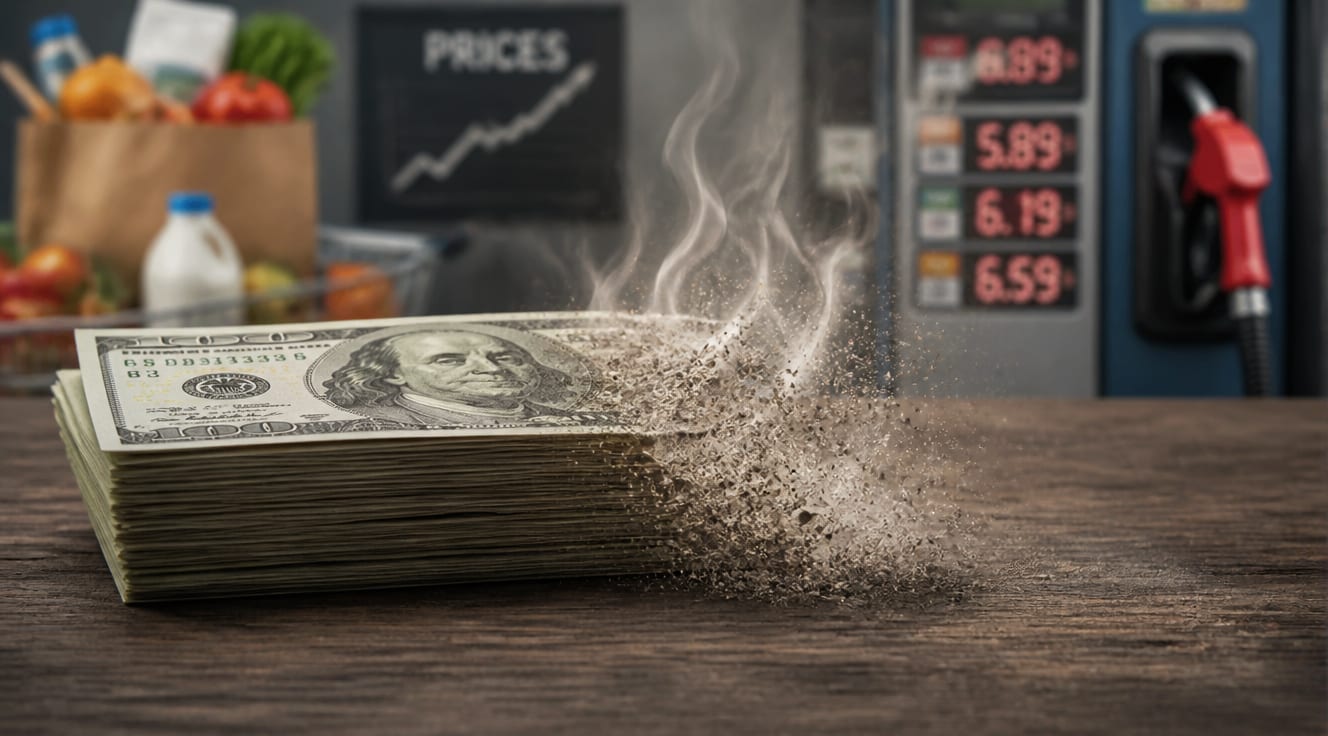
Inflation is the rate at which the general level of prices for goods and services is rising, and consequently, the purchasing power of currency is falling. This economic phenomenon directly impacts your money by eroding its value over time, making everything from groceries to gasoline more expensive and diminishing the real return on your savings and investments.
What Exactly Is Inflation?
At its core, inflation signifies a broad increase in prices across an economy, leading to a reduction in what your money can buy. Imagine a basket of common goods and services; if that basket costs more this year than last year, you’re experiencing inflation.
The most common measure of inflation is the Consumer Price Index (CPI), which tracks the average change over time in the prices paid by urban consumers for a market basket of consumer goods and services. When the CPI rises, it indicates that the cost of living is increasing.
For instance, if the annual inflation rate is 3%, an item that cost $100 last year will cost $103 this year. This seemingly small change can have a significant cumulative effect on your personal finance over decades.
According to recent government data, the average annual inflation rate in many developed economies has fluctuated, but generally aims for a target of around 2-3% to maintain economic stability.
What Causes Inflation? Understanding the Drivers
Inflation isn’t a singular event but rather a complex economic outcome driven by various factors. Understanding these causes is crucial for comprehending its impact on your money.
- Demand-Pull Inflation: This occurs when there’s more money chasing fewer goods. A strong economy, increased consumer spending, or government stimulus can create excessive demand, pushing prices up.
- Cost-Push Inflation: This type arises when the cost of producing goods and services increases. This could be due to higher raw material prices, increased wages, or supply chain disruptions, which businesses then pass on to consumers.
- Built-In Inflation (Wage-Price Spiral): This happens when workers demand higher wages to maintain their living standards in the face of rising prices, and businesses, in turn, raise prices further to cover their increased labor costs. This creates a self-fulfilling cycle.
- Monetary Policy: Central banks can influence inflation by controlling the money supply. Printing more money or lowering interest rates can stimulate borrowing and spending, potentially leading to inflation.
- Supply Shocks: Unexpected events like natural disasters, geopolitical conflicts, or pandemics can disrupt the supply of key goods (e.g., oil), leading to sudden price increases.
These factors often interact, making the causes of inflation multifaceted and sometimes difficult to predict.
How Does Inflation Directly Impact Your Personal Finances?
The most direct impact of inflation on your money is the erosion of its purchasing power. Every dollar you own today will buy less tomorrow if inflation persists. This affects nearly every aspect of your financial life.
Your savings, investments, and even your debt are all subject to the whims of inflation. Understanding these effects is key to protecting your financial well-being.
The Hidden Tax on Savers
Inflation acts like a hidden tax, silently diminishing the value of your cash and fixed-income savings. If your savings account offers an interest rate lower than the inflation rate, your money is effectively losing value in real terms.
For example, if you have $10,000 in a savings account earning 1% interest, but inflation is 3%, your real return is -2%. This means your $10,000 will only have the purchasing power of $9,800 a year later.
Historical economic reports show that over long periods, cash held in traditional savings accounts often struggles to keep pace with inflation, highlighting the importance of strategic financial planning.
Investment Performance During Inflation
Inflation can significantly alter the performance of different asset classes. What performs well in a low-inflation environment might struggle when prices are rapidly rising.
Understanding which investments tend to fare better can help you adjust your portfolio to protect your money.
| Asset Class | Performance During High Inflation | Reasoning |
|---|---|---|
| Cash & Fixed Income (Bonds) | Poor | Fixed payments lose purchasing power; bond yields may not keep up. |
| Stocks (Growth) | Mixed to Poor | Higher interest rates can hurt growth companies; profit margins may be squeezed. |
| Stocks (Value/Dividend) | Better | Companies with strong pricing power and stable dividends can perform well. |
| Real Estate | Good | Property values and rental income often rise with inflation; acts as a hedge. |
| Commodities (Gold, Oil) | Good | Often seen as inflation hedges; prices tend to rise with general price levels. |
| Inflation-Protected Securities (TIPS) | Excellent | Principal value adjusts with inflation, directly protecting purchasing power. |
Managing debt during inflation also requires attention. Fixed-rate debt becomes easier to pay off in real terms as the value of money decreases. However, variable-rate debt can become more expensive if interest rates rise in response to inflation.
Strategies to Protect Your Money from Inflation
While inflation is an economic force beyond individual control, there are proactive steps you can take to mitigate its negative effects on your personal finance and safeguard your money.
- Invest in Inflation-Protected Assets: Consider Treasury Inflation-Protected Securities (TIPS), real estate, commodities (like gold or oil), or certain types of dividend-paying stocks. These assets tend to perform better when inflation is high.
- Diversify Your Portfolio: A well-diversified portfolio, including a mix of stocks, bonds, real estate, and potentially alternative investments, can help cushion the blow of inflation by ensuring not all your assets are equally vulnerable.
- Manage Debt Wisely: Prioritize paying off high-interest, variable-rate debt. If you have fixed-rate debt (like a mortgage), inflation can actually make it easier to pay off in real terms, as your future income might increase while your payment remains constant.
- Increase Your Income: Seek opportunities to increase your earnings, whether through salary negotiations, side hustles, or investing in skills that command higher wages. Your income needs to at least keep pace with inflation to maintain your purchasing power.
- Review Your Budget Regularly: Inflation means the cost of your regular expenses will likely increase. Regularly review and adjust your budget to account for these rising costs and identify areas where you can cut back or optimize spending.
- Consider I-Bonds: These are U.S. Treasury savings bonds that earn interest based on a fixed rate and a variable inflation rate, offering a safe way to protect your savings from inflation.
According to financial planning experts, a diversified investment strategy that includes inflation hedges has historically provided better real returns over the long term compared to simply holding cash.
Case Study: Navigating the 1970s Inflation
The 1970s in the United States offer a stark example of high inflation. During this period, the Consumer Price Index soared, peaking at over 13% annually. Individuals who held significant cash or traditional fixed-income investments saw their purchasing power severely eroded.
Those who fared better often had investments in real assets like real estate, commodities, or stocks of companies with strong pricing power. For instance, homeowners saw their property values appreciate significantly, providing a hedge against the rising cost of living. Investors who bought gold or oil futures also saw substantial gains.
This period underscored the importance of dynamic financial planning, adapting investment strategies to the prevailing economic climate, and understanding how inflation affects your money in real terms.
Is Inflation Always Bad?
While often viewed negatively, a moderate level of inflation (typically 2-3% annually) is generally considered healthy for an economy. It encourages spending and investment, as consumers and businesses are incentivized to use their money rather than let it lose value.
Central banks actively manage monetary policy to achieve this target, aiming to avoid both high inflation (which destabilizes the economy) and deflation (a sustained decrease in prices, which can lead to economic stagnation).
The key is balance. Too much inflation is detrimental, but too little can also signal economic weakness.
Take Control: Actionable Steps to Safeguard Your Financial Future Today
Protecting your money from the effects of inflation requires awareness and proactive financial planning. Start by reviewing your current financial situation, including your savings, investments, and debt.
Consider diversifying your investment portfolio with assets that historically perform well during inflationary periods. Reassess your budget to account for rising costs and look for opportunities to increase your income. By taking these deliberate steps, you can build resilience into your personal finance and ensure your money continues to work for you, even in a changing economic landscape.
Întrebări frecvente
What is the Consumer Price Index (CPI)?
The Consumer Price Index (CPI) is a measure that examines the weighted average of prices of a basket of consumer goods and services, such as transportation, food, and medical care. It is calculated by taking price changes for each item in the predetermined basket of goods and averaging them. Changes in the CPI are used to assess price changes associated with the cost of living and is the most commonly used indicator for measuring inflation.
Does inflation affect everyone equally?
No, inflation does not affect everyone equally. Individuals on fixed incomes, such as retirees relying on pensions or social security that don’t adjust for inflation, are often hit hardest as their purchasing power diminishes. Savers with large cash holdings also suffer. Conversely, borrowers with fixed-rate debt can benefit as the real value of their debt decreases. Younger individuals with rising incomes may find it easier to keep pace.
What is the difference between inflation and deflation?
Inflation is the rate at which the general level of prices for goods and services is rising, leading to a decrease in purchasing power. Deflation, on the other hand, is a sustained decrease in the general price level of goods and services. While inflation erodes money’s value, deflation increases it, but can lead to economic stagnation as consumers delay purchases anticipating lower prices, and businesses struggle with falling revenues.
How can I check the current inflation rate?
You can check the current inflation rate by looking at official government statistics. In the United States, the Bureau of Labor Statistics (BLS) publishes the Consumer Price Index (CPI) monthly. Similar government agencies exist in other countries (e.g., Eurostat for the Eurozone, Office for National Statistics in the UK). Major financial news outlets and central bank websites also frequently report and analyze these figures.
Should I invest in gold during high inflation?
Gold is often considered a traditional hedge against inflation because its value tends to rise when the purchasing power of fiat currencies declines. Many investors turn to gold during periods of economic uncertainty or high inflation to preserve wealth. However, gold does not generate income and its price can be volatile. While it can be a component of a diversified portfolio, it’s generally not recommended as the sole inflation-protection strategy.