

The best stretches for lower back pain relief target the lumbar spine, hip flexors, hamstrings, and gluteal muscles to release tension, improve mobility, and reduce pressure on the lower vertebrae. Movements such as the knee-to-chest stretch, child’s pose, cat-cow, and supine spinal twist consistently rank highest in clinical research because they decompress the lumbar region without overloading it. When performed daily and combined with core activation, these stretches can reduce pain intensity by up to 32% within four weeks, according to a 2017 study published in the Annals of Internal Medicine.
Why Your Lower Back Hurts in the First Place
Lower back pain rarely has a single cause. In most cases, it develops from a combination of tight hip flexors, weak core muscles, and prolonged sitting, which together pull the pelvis out of neutral alignment. The World Health Organization estimates that approximately 619 million people worldwide lived with low back pain in 2020, making it the leading cause of disability globally. The American Physical Therapy Association adds that roughly 80% of U.S. adults will experience at least one episode of low back pain during their lifetime.
Muscle imbalances are the silent drivers behind most cases. When the psoas and quadriceps shorten from hours of sitting, they tilt the pelvis forward and force the lumbar spine into hyperlordosis. The result is constant compression of the facet joints and intervertebral discs, which produces the dull, aching pain most people describe when they stand up after a long workday.
7 Best Stretches for Lower Back Pain Relief You Can Do at Home
The following stretches are ranked by clinical effectiveness and ease of execution. Each one can be performed on a yoga mat or a soft floor without any equipment.
1. Knee-to-Chest Stretch
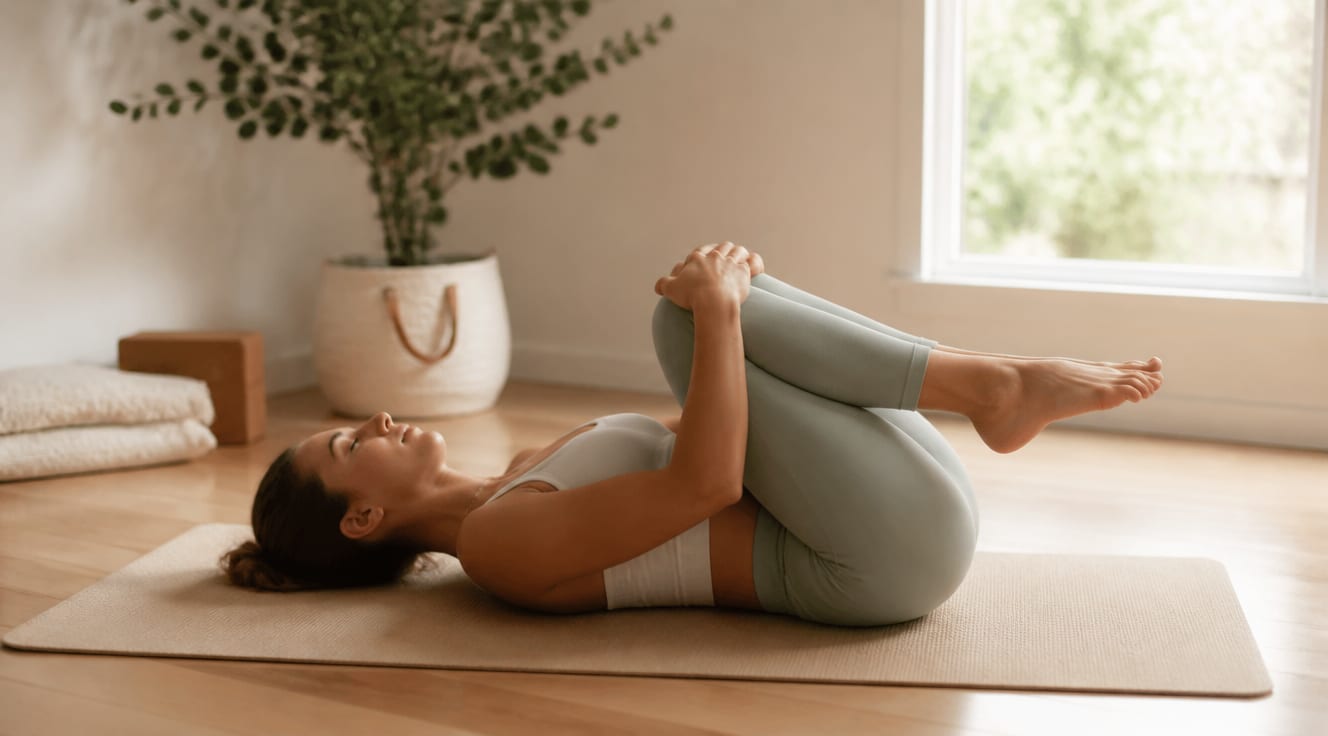
Lie on your back with knees bent and feet flat on the floor. Slowly draw one knee toward your chest, holding it with both hands for 20–30 seconds. Keep the lower back pressed into the floor. Repeat on the other side, then perform both knees together. This stretch decompresses the lumbar vertebrae and lengthens the gluteal muscles.
2. Supine Spinal Twist
Still on your back, extend your arms in a T-shape. Bring one knee toward the chest and guide it across your body toward the floor on the opposite side, keeping both shoulders grounded. Hold for 20–30 seconds per side. The twist mobilizes the thoracolumbar fascia and releases rotational tension in the lower back.
3. Cat-Cow Stretch
Position yourself on hands and knees with a neutral spine. Inhale and arch your back, lifting the chest and tailbone (cow). Exhale and round your spine, tucking the chin and tailbone (cat). Perform 10–15 slow repetitions. Cat-cow alternates flexion and extension, lubricating the spinal discs and improving segmental mobility.
4. Child’s Pose
From a kneeling position, sit your hips back onto your heels and extend your arms forward on the floor, lowering your chest toward your thighs. Hold for 30–60 seconds. Child’s pose gently lengthens the erector spinae and creates space between the vertebrae, making it one of the safest stretches for acute back discomfort.
5. Figure-Four Stretch
Lie on your back, bend your knees, and cross one ankle over the opposite thigh. Lift the bottom leg and pull it gently toward your chest, clasping behind the thigh. Hold 30 seconds per side. This stretch targets the piriformis, a muscle whose tightness can mimic or aggravate sciatica-related discomfort.
6. Cobra Stretch
Lie face down with hands beneath the shoulders. Press through the palms to lift the chest off the floor, keeping elbows close to the body and the pelvis grounded. Hold for 10–20 seconds and repeat 3–4 times. Cobra promotes spinal extension and counteracts the forward-flexed posture caused by long sitting sessions.
7. Seated Hamstring Stretch
Tight hamstrings pull the pelvis into a posterior tilt, flattening the lumbar curve and transferring load to the lower back. Sit on the edge of a chair, extend one leg forward with the heel on the floor and toes up, and gently hinge forward from the hips until you feel a stretch behind the thigh. Hold 30 seconds per side.
How to Stretch Safely Without Worsening the Pain
Stretches are beneficial only when performed with proper form. A 2024 clinical guideline from the BMJ recommends movement over rest for non-specific low back pain, but warns that aggressive or ballistic stretching can aggravate symptoms. The key rules are:
- Move into each stretch slowly and stop at the first point of tension, never at the point of pain.
- Breathe through every hold. Holding your breath increases muscular guarding and reduces the stretch’s effectiveness.
- Avoid bouncing. Ballistic stretching triggers the stretch reflex, which causes the muscle to contract instead of lengthening.
- Respect acute inflammation. If the area is hot, swollen, or radiating pain down the leg, replace stretches with gentle walking and consult a clinician.
Best Lower Back Stretches Compared
| Stretch | Primary Target | Difficulty | Hold Time | Best Time of Day |
|---|---|---|---|---|
| Knee-to-Chest | Lumbar spine, glutes | Beginner | 20–30 sec | Morning or evening |
| Supine Spinal Twist | Thoracolumbar fascia | Beginner | 20–30 sec per side | Evening |
| Cat-Cow | Segmental spine mobility | Beginner | 10–15 reps | Morning |
| Child’s Pose | Erector spinae | Beginner | 30–60 sec | Any time |
| Figure-Four | Piriformis, glutes | Intermediate | 30 sec per side | Evening |
| Cobra | Spinal extensors | Intermediate | 10–20 sec | Morning |
| Seated Hamstring | Hamstrings, pelvis | Beginner | 30 sec per side | Workday breaks |
Case Study: How a 38-Year-Old Office Worker Reduced Chronic Back Pain in Six Weeks
Mark, a 38-year-old marketing analyst from Austin, suffered from constant lower back stiffness that worsened by 3 p.m. every workday. After a clinical assessment ruled out disc herniation, his physical therapist prescribed a 15-minute routine combining the knee-to-chest stretch, cat-cow, and seated hamstring stretch, performed twice daily. Within three weeks, his pain rating on the Oswestry Disability Index dropped from 28% to 12%, and by week six he reported being able to sit through full workdays without discomfort. His therapist credits the combination of hip-flexor lengthening and spinal mobilization rather than any single exercise.
Frequently Asked Questions
How often should I stretch to relieve lower back pain?
For best results, perform your chosen stretches two to three times per day during flare-ups and at least once daily for maintenance. Consistency matters more than duration, so a focused 10-minute routine is more effective than one long weekly session.
Are stretches safe during a back pain flare-up?
Gentle stretches such as child’s pose and the supine spinal twist are typically safe. However, avoid cobra, deep twists, or any stretch that reproduces sharp or radiating pain. If symptoms persist beyond 72 hours, seek evaluation from a qualified clinician.
How long until I feel results from back stretches?
Most people notice reduced stiffness within the first week. A peer-reviewed study in the Annals of Internal Medicine found clinically meaningful improvements in pain and function after 12 weeks of consistent stretching, with measurable gains appearing as early as week four.
Can stretching alone fix chronic lower back pain?
Stretching addresses muscular tightness but rarely solves chronic pain on its own. The strongest outcomes come from combining lower back stretches with core strengthening (planks, dead bugs), posture correction, and professional assessment when pain lasts more than 12 weeks.
Is stretching better than rest for lower back pain?
Yes. A 2016 systematic review published in the BMJ found that exercise-based approaches reduced the risk of recurring lower back pain by up to 45% compared with passive rest or general medical care alone.
How to Put This Into Practice Starting Today
Begin tonight with two minutes of child’s pose followed by the knee-to-chest stretch on each side. Tomorrow morning, add the cat-cow sequence as soon as you wake up, before checking your phone. Set a recurring alarm at 2:30 p.m. for the seated hamstring stretch and a wall-supported standing back extension to interrupt the slump of prolonged sitting. Track your pain level on a simple 0-to-10 scale each evening, and reassess your routine at the two-week mark. If the pain persists or worsens, book an appointment with a physical therapist who can tailor the best stretches for lower back pain relief to your specific diagnosis and movement patterns.