

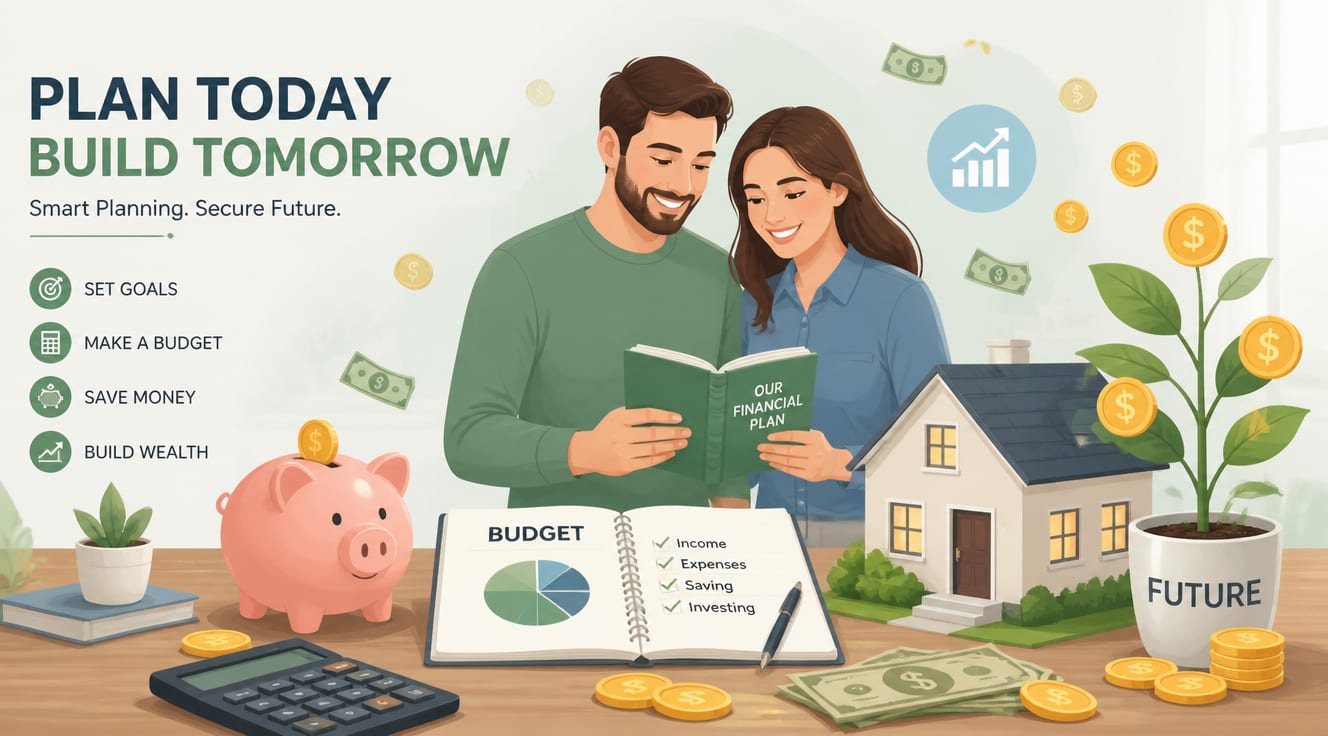
To save for a house down payment, most buyers need to set aside 3% to 20% of the home’s purchase price, which translates to anywhere from $8,400 to $56,000 on a $280,000 property. The fastest path combines a high-yield savings account, a strict monthly budget, and automated transfers that treat your down payment like a non-negotiable bill. With the average first-time buyer putting down 8% according to the National Association of Realtors (NAR), roughly $22,400 in 2023, building that fund in 2 to 4 years is realistic on a median U.S. household income of $74,580.
How Much Down Payment Do You Actually Need in 2024?
The 20% down payment rule is more myth than necessity for most buyers. Conventional loans now offer programs starting at just 3% down, while FHA loans approved by the Federal Housing Administration require as little as 3.5% with a credit score of 580 or higher. VA loans for military members and USDA loans for rural properties can require zero down payment at all.
Your real number depends on three factors: the loan type you qualify for, the home price in your target market, and whether you want to avoid private mortgage insurance (PMI). PMI typically costs 0.55% to 2.25% of the original loan amount annually until you reach 20% equity, according to the Urban Institute, which makes a larger down payment financially smarter for buyers who can afford to wait.
What Is the Best Way to Save for a House Down Payment?
A winning down payment savings strategy has three layers: a realistic timeline, a protected account, and a surplus generator. Most financial planners recommend keeping your down payment in cash-equivalent accounts rather than stocks or crypto, because you typically have 2 to 5 years before you need the funds, and you cannot afford a market downturn right before closing.
Proven Tactics That Accelerate Your Savings
- The 50/30/20 budget twist: Allocate 30% to wants, 20% to savings, and 50% to needs. Within that 20%, dedicate the entire slice to your home fund. A household earning $74,580 would save about $1,243 per month.
- Automate transfers on payday: Behavioral research from the University of Chicago shows workers who automate savings save 3.5 times more than those who save manually. Set up a recurring transfer the same day your paycheck hits.
- Redirect windfalls: Tax refunds, work bonuses, gifts, and freelance income should land directly in your down payment account. The average federal tax refund in 2023 was $3,140, enough to cover 2.5 months of disciplined saving.
- Slash one recurring expense: Canceling cable (average $83/month), downgrading a car, or refinancing high-interest debt can free up $100 to $400 monthly without changing your lifestyle.
- Increase income temporarily: A side hustle at $20/hour for 10 hours per week adds roughly $800 monthly before taxes.
Down Payment Savings Accounts: Where Should You Keep Your Money?
Not every account is built for a down payment. Your money needs to be safe, accessible, and earning more than the 0.45% national savings average published by the FDIC. The table below compares the most common options for first-time home buyer savings.
| Account Type | Typical APY | FDIC Insured | Access to Funds | Best For |
|---|---|---|---|---|
| Traditional Savings Account | 0.40% – 0.50% | Yes | Instant | Emergency buffer only |
| High-Yield Savings Account | 4.00% – 5.25% | Yes | 1–3 business days | Primary down payment fund |
| Money Market Account | 3.50% – 4.75% | Yes | Same day (debit card) | Active savers who want card access |
| Certificate of Deposit (CD) Ladder | 4.50% – 5.00% | Yes | Locked until maturity | Funds you’re certain you won’t need early |
| I-Bonds (Treasury) | 4.28% (current composite rate) | Government-backed | After 12 months | Funds you can park for 1+ year |
A high-yield savings account is almost always the right home for a down payment fund. You earn competitive interest, your money is federally protected, and transfers to your closing escrow are fast.
Real Example: How One Couple Saved $40,000 in 36 Months
Maya and James, both 29, lived in Raleigh, NC on a combined income of $98,000. They wanted a $320,000 home and needed to save 12.5% ($40,000) to avoid PMI while keeping $15,000 for closing costs separate. Their plan worked as follows:
- Month 1: Opened a Marcus by Goldman Sachs high-yield savings account at 4.30% APY and automated a $1,100 transfer every payday.
- Months 2–6: Sold unused belongings, netting $3,200. Diverted James’s quarterly bonuses ($2,400 each) directly into the fund.
- Months 7–24: Picked up weekend catering shifts averaging $600/month after expenses. Maya refinanced her student loans, dropping her payment by $180/month, redirected entirely to savings.
- Months 25–36: Froze their Roth IRA contributions and moved that $583/month into the down payment account, finishing 4 months ahead of schedule.
Total contributed: $39,600. Interest earned in the high-yield account: roughly $2,400. Final balance: $42,000, giving them a comfortable buffer for appraisal and inspection costs.
Common Mistakes to Avoid When Saving for a Down Payment
Most delays come from predictable errors. Sidestepping them can shave months off your timeline:
- Touching the fund. The NAR reports that 38% of first-time buyers use gift funds, which often signals the saver dipped in earlier. Label the account mentally as “do not touch.”
- Forgetting closing costs. Closing costs typically run 2% to 5% of the loan amount. Saving $40,000 for the down payment and having nothing left for $8,000 in fees will halt your closing.
- Ignoring down payment assistance programs. More than 2,300 programs exist through state housing finance agencies, and many first-time buyers qualify for $5,000 to $25,000 in grants or forgivable loans. Check your state’s HFA site before assuming you need every dollar in cash.
- Pausing retirement contributions entirely. Stopping 401(k) matches forfeits free money. Keep the match and reduce the contribution percentage, then rebuild when you’ve closed.
- Waiting for the “perfect” rate. Housing wealth has historically outpaced the cost of waiting. According to the Federal Reserve, median U.S. home prices rose 47% from 2014 to 2024. Every month you delay is roughly 0.3% more in purchase price.
How to Start Saving for a Down Payment Starting Today
By tonight, you can complete the first three moves that separate buyers who save successfully from those who keep planning:
- Open a dedicated high-yield savings account in the next 15 minutes at a reputable bank. Label it “HOME — Do Not Touch.”
- Set up a recurring transfer of 10% to 20% of each paycheck, scheduled for the day after payday to avoid overdraft risk.
- Pull up your state’s housing finance agency website tonight and check your eligibility for down payment assistance. Many programs require a free 60-minute counseling session you can schedule this week.
- Audit one recurring subscription this week and cancel or downgrade it. Direct that canceled payment to your down payment fund beginning next billing cycle.
- Within 30 days, run a soft-pull mortgage prequalification to confirm your price target, then build a milestone chart showing your monthly progress.
Consistency is the only real secret. Buyers who automate, track monthly, and resist dipping into the fund reach their down payment goal in a median of 3.2 years, fast enough to outpace rising home prices in most U.S. metros.
Întrebări frecvente
How long does it take to save for a 20% down payment?
On a median U.S. household income of $74,580, saving a full 20% on a $400,000 home would require $80,000. Setting aside 20% of take-home pay each month would take roughly 8 to 9 years. Most buyers shorten this timeline by combining savings with down payment assistance, employer relocation funds, gift money from relatives, or by choosing loan programs that require only 3% to 5% down. A realistic 3.5% FHA down payment on the same home is $14,000, reachable in 18 to 24 months for the same household.
Can I use my 401(k) for a down payment without penalty?
You can, but it is rarely the best first option. A traditional 401(k) withdrawal is taxed as ordinary income plus a 10% early withdrawal penalty if you are under 59½. Borrowing from your 401(k) avoids the penalty but requires repayment within 5 years or it becomes taxable. First-time buyers have one better alternative: a Roth IRA withdrawal of up to $10,000 in earnings is tax- and penalty-free if the account has been open at least 5 years. Compare this to the long-term cost of pausing retirement growth before tapping any retirement account.
What is the cheapest way to save for a down payment?
The cheapest method is a high-yield savings account paired with automated payroll transfers, because it costs nothing to open, has no minimum balance at most online banks, and currently pays 4% to 5.25% APY. Marcus by Goldman Sachs, Ally, and Amalgamated Bank are common examples. Compared to a standard bank savings account at 0.45%, parking $30,000 for 2 years earns roughly $2,700 more in interest with no added risk because funds remain FDIC insured up to $250,000.
Do I need perfect credit to buy a house with a low down payment?
No, you do not need perfect credit, but your score significantly affects your rate. FHA loans accept scores as low as 580 with 3.5% down, and even 500 with 10% down. Conventional 97% LTV programs from Fannie Mae require a minimum 620 FICO. Each 20-point improvement below 740 typically reduces your mortgage rate by about 0.25%, which on a $280,000 loan equals roughly $50/month or $18,000 over 30 years, so paying down balances before applying often pays back more than saving extra cash.
Are down payment assistance programs really free money?
Many are. According to the U.S. Department of Housing and Urban Development, more than $2 billion in down payment assistance was awarded in 2022 through state and local programs. The largest categories are grants (true gifts that need not be repaid) and forgivable second mortgages (loans forgiven after 5 to 15 years of owner occupancy). A small share are deferred-payment loans that become due when you sell or refinance. Always read the occupancy requirement, income cap, and resale-recapture clauses, since most programs require you to live in the home for a minimum period.