

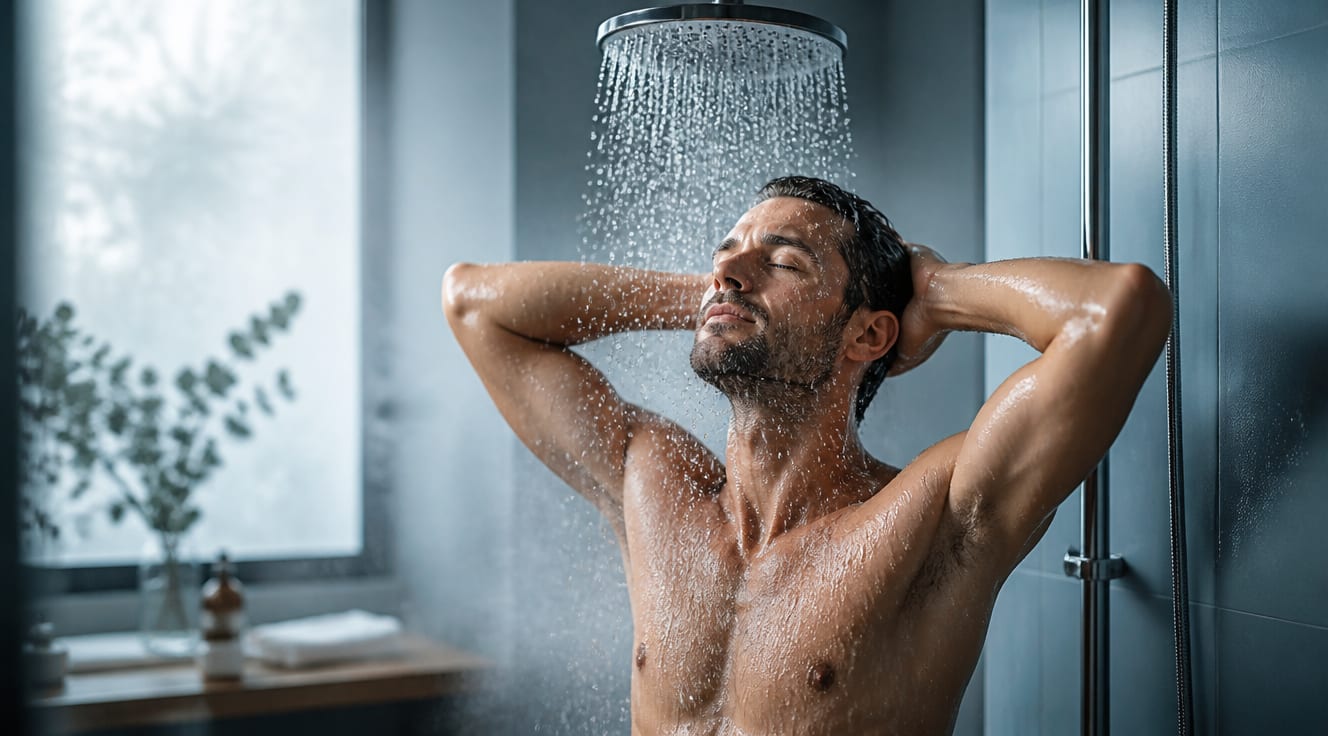
Cold showers are not just a wellness trend—they deliver measurable, science-backed benefits for circulation, mental alertness, and immune function, according to peer-reviewed research. While they won’t replace medical treatment or single-handedly transform your health, studies show that deliberate cold exposure can reduce sick days, boost mood, and improve recovery when practiced consistently. The key is understanding what cold showers actually do, separating hype from evidence, and applying them safely.
What Does the Science Actually Say About Cold Showers?
Over the past decade, researchers have revisited cold water therapy with more rigorous methods. The results challenge the assumption that cold showers are merely a masochistic ritual for extreme athletes.
A landmark 2016 randomized controlled trial published in PLOS ONE followed 3,018 participants over 90 days. The group that ended their showers with 30–90 seconds of cold water reported a 29% reduction in self-reported sickness absence from work. Researchers linked the effect to cold-induced activation of the sympathetic nervous system and increased leukocyte circulation.
Another study, published in the European Journal of Applied Physiology, found that brief cold water immersion at 14°C (57°F) raised plasma norepinephrine levels by 200–300%. Norepinephrine is a neurotransmitter that suppresses inflammation, sharpens focus, and plays a documented role in mood regulation. This is why most people feel alert and energized immediately after a cold shower.
Research from the Journal of Clinical Investigation also showed that cold exposure activates brown adipose tissue (brown fat), which helps the body burn calories to generate heat. Though modest, this metabolic effect contributes to the broader conversation about cold showers and weight management.
Cold Shower vs Hot Shower: Which One Wins?
Both temperatures have legitimate uses, but they trigger different physiological responses. Here’s a direct comparison based on current evidence:
| Factor | Cold Shower (≤15°C / 59°F) | Hot Shower (≥38°C / 100°F) |
|---|---|---|
| Circulation | Constricts then expands vessels; improves vascular tone | Dilates vessels; relaxes muscles |
| Alertness | Sharpens focus via norepinephrine spike | May cause drowsiness |
| Muscle Recovery | Reduces inflammation post-exercise | Increases blood flow, eases stiffness |
| Skin & Hair | Tightens pores, seals cuticles | Opens pores, may strip natural oils |
| Sleep Quality | Not recommended before bed | Promotes relaxation and melatonin release |
| Calorie Burn | Activates brown fat, modest thermogenic effect | Minimal metabolic impact |
The verdict depends on your goal. For morning alertness and immune support, cold showers win. For evening relaxation and sleep preparation, hot showers are better.
Proven Benefits Backed by Research
When practiced consistently, cold showers deliver several measurable benefits:
- Reduced sick days: The PLOS ONE study cited above showed a 29% drop in work absence among regular cold shower users.
- Improved mood: A 2020 case series published in Medical Hypotheses reported that cold water exposure reduced depressive symptoms in participants who had not responded to conventional treatment, likely due to the cold-induced release of noradrenaline and beta-endorphins.
- Faster muscle recovery: A 2012 review in the International Journal of Sports Medicine found that cold water immersion after exercise reduced muscle soreness by an average of 20% compared to passive recovery.
- Stronger immune response: Cold exposure increases circulating white blood cells and natural killer cells, according to a 1998 study in the European Journal of Applied Physiology.
- Enhanced willpower: A 2013 study in the Journal of Consumer Research linked daily cold showers to improved self-discipline and tolerance for discomfort in other areas of life.
The Risks and Who Should Avoid Cold Showers
Cold showers are not safe for everyone. The cold shock response can be dangerous for individuals with certain cardiovascular conditions.
People with uncontrolled hypertension, heart arrhythmias, or Raynaud’s disease should avoid sudden cold exposure. The American Heart Association notes that abrupt temperature changes can trigger arrhythmias in susceptible individuals. Pregnant women should also consult a doctor before starting cold water therapy.
Begin gradually. Jumping into a 10°C shower without acclimation can cause hyperventilation, dizziness, or even fainting. Start with 10–15 seconds at the end of your normal shower and build up over weeks.
Real-World Results: A Case Study
Consider the protocol popularized by Wim Hof, the Dutch extreme athlete known as “The Iceman.” Hof has climbed Mount Kilimanjaro in shorts and run a half marathon barefoot on ice. His method combines breathing exercises, meditation, and gradual cold exposure.
In a 2014 study published in PNAS, researchers trained 24 healthy volunteers in the Wim Hof method for 10 days. When injected with endotoxin (a substance that normally causes flu-like symptoms), the trained group showed significantly fewer symptoms, lower levels of pro-inflammatory cytokines, and higher levels of anti-inflammatory compounds compared to the control group. This was the first study to demonstrate that a voluntary behavioral practice could influence the innate immune system at a molecular level.
While Hof’s feats are extreme, the underlying principle—gradual, controlled cold exposure—applies to anyone willing to start small.
How to Start a Cold Shower Routine Safely
Follow this step-by-step protocol to build tolerance without shocking your system:
- Week 1: Finish your normal warm shower with 10–15 seconds of cool water. Focus on breathing slowly through the initial shock.
- Week 2: Increase to 20–30 seconds. Lower the temperature slightly each day.
- Week 3: Extend to 45–60 seconds at a noticeably cold temperature (around 20°C / 68°F).
- Week 4 and beyond: Aim for 1–2 minutes at 15°C (59°F) or lower. Some enthusiasts reach 5+ minutes, but this is optional.
- Daily habit: Consistency matters more than duration. Even 30 seconds daily produces measurable benefits over time.
Always breathe calmly during the cold exposure. Holding your breath increases stress; controlled breathing keeps your heart rate stable.
Frequently Asked Questions
How long should a cold shower be to see benefits?
Research suggests 30–90 seconds is enough to trigger the key physiological responses. Longer exposure (2–3 minutes) may offer additional recovery benefits after intense exercise, but daily 1-minute sessions are sufficient for general health.
Can cold showers help with weight loss?
Cold showers activate brown fat, which burns calories to generate heat. However, the effect is modest—roughly an extra 50–100 calories per session according to a 2012 study in Trends in Endocrinology and Metabolism. They support, but do not replace, a proper diet and exercise program.
Is it better to take cold showers in the morning or evening?
Morning is ideal for most people. Cold exposure suppresses melatonin and raises cortisol and norepinephrine, which promote alertness. Evening cold showers can interfere with sleep onset for sensitive individuals.
Do cold showers really boost the immune system?
Yes, but modestly. Studies show increased circulation of white blood cells and natural killer cells after cold exposure. This does not prevent illness outright, but it appears to reduce the severity and duration of common infections.
What temperature counts as a “cold” shower?
Most research uses water between 10–18°C (50–64°F). Anything below 20°C (68°F) will trigger the cold shock response. Tap water in winter often falls within this range naturally.
How to Apply This Starting Today
You don’t need to overhaul your routine tonight. Here’s a simple action plan:
Tonight: Take your normal shower and finish with 15 seconds of cool water. Breathe slowly and notice how you feel afterward.
This week: Add 5 seconds each day. Track your mood, energy, and sleep in a simple notebook.
Next month: Aim for a full 60-second cold finish at the lowest temperature you can tolerate comfortably. Reassess your goals—whether it’s fewer sick days, sharper focus, or better workout recovery.
The science is clear: cold showers are not a fad. They are a low-cost, evidence-based practice with real physiological benefits. The trend is simply catching up to what researchers have known for years.